

Car accidents in Santa Cruz County can leave victims facing mounting medical bills and lost wages while dealing with uncooperative insurance companies.
When settlement negotiations fail to provide fair compensation, filing a car accident injury lawsuit becomes the next logical step. We at Schaar & Silva LLP understand the complexities of California’s legal system and the steps required to pursue justice through the courts.
When to File a Car Accident Injury Lawsuit
California law gives you exactly two years from your accident date to file a car accident injury lawsuit, but waiting until the deadline approaches puts your case at serious risk. The statute of limitations for personal injury claims begins immediately after your crash, and missing this deadline means you lose your right to compensation forever. If your accident involved a government vehicle in Santa Cruz County, you have just six months to file a notice of claim before you pursue legal action. Insurance companies know these deadlines and often drag out settlement talks hoping you’ll run out of time.
Settlement Negotiations Reach a Dead End
Most insurance companies make their final settlement offer within 90 days of receipt of your claim, and this initial offer typically covers only 20-30% of actual damages according to industry data. When insurers refuse to budge from lowball offers that don’t cover your medical expenses and lost wages, litigation becomes necessary. Insurance adjusters frequently deny treatment necessity or dispute injury severity to minimize payouts. If your medical bills exceed $25,000 or you’ve suffered permanent disabilities, settlement negotiations rarely produce fair results without lawsuit pressure. The threat of court proceedings forces insurance companies to reassess their position and offer realistic compensation amounts.
Your Injuries Justify Legal Action
Soft tissue injuries that seemed minor initially often develop into chronic conditions that require treatment over months or years. When your injury prevents you from work or significantly impacts your daily activities, the financial damages quickly exceed typical insurance settlement ranges. California’s comparative negligence law allows you to recover damages even if you’re partially at fault, which makes lawsuits viable in many disputed liability cases. Head injuries, spinal damage, and fractures that require surgery almost always warrant lawsuit consideration due to their long-term medical and financial implications.
Time Pressure Creates Urgency
The two-year deadline approaches faster than most accident victims realize (especially when you’re focused on recovery and medical treatment). Insurance companies often schedule settlement conferences just weeks before your statute of limitations expires, hoping you’ll accept inadequate offers under time pressure. Medical records take weeks to obtain, accident reconstruction reports require months to complete, and witness statements become less reliable as time passes. Starting the lawsuit process early gives you leverage in negotiations and protects your legal rights if settlement talks fail completely.
With these timing considerations and injury assessments complete, you’ll need to understand the specific steps required to file your lawsuit properly.
Steps to File Your Car Accident Lawsuit
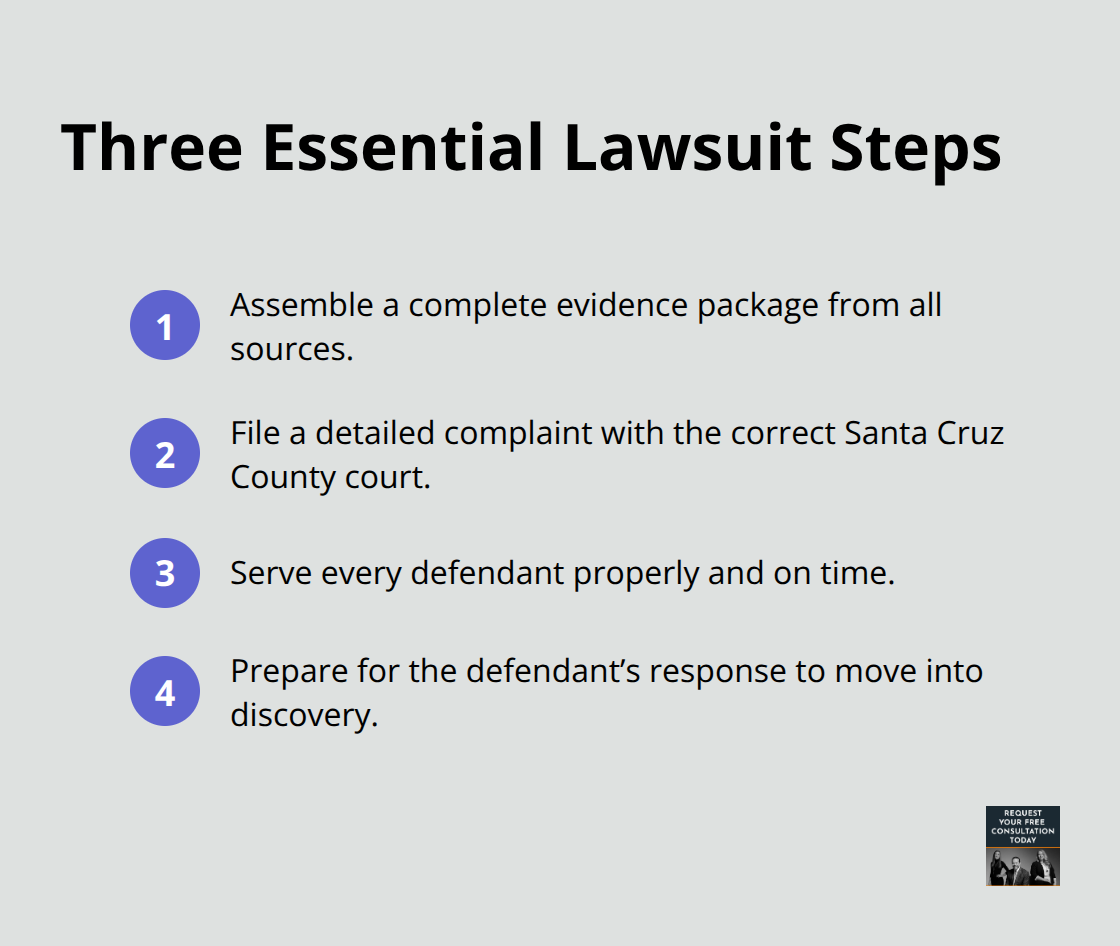
Your car accident lawsuit requires three essential steps that must occur in precise sequence, and mistakes in any step can destroy your entire case. You must first assemble a complete evidence package that includes police reports, medical records from all treating physicians, witness statements with contact information, photographs of vehicle damage and the accident scene, and documentation of all financial losses including pay stubs and medical bills. California courts require original medical records with physician signatures, not copies, which means you need 2-4 weeks to request these documents from each healthcare provider.
Your evidence collection must also include the other driver’s insurance policy limits (which you can obtain through a formal discovery request) and any traffic camera footage from Santa Cruz County, which gets automatically deleted after 30 days if not preserved.
File Your Complaint With the Correct Court
You must file your lawsuit complaint with Santa Cruz County Superior Court if your accident occurred within county boundaries, and this document serves as your formal demand for compensation that outlines exactly what happened and what damages you seek. The court charges a $435 filing fee for cases that seek more than $25,000 in damages, though fee waivers are available for low-income plaintiffs who earn less than $27,750 annually. Your complaint must identify all defendants by their legal names, not just John Doe, which requires you to obtain this information through DMV records or insurance company communications. California law mandates that your complaint include specific damage amounts for medical expenses, lost wages, and pain and suffering, and you limit your maximum recovery if you understate these figures even when your actual damages exceed your initial claim.
Serve the Defendant Properly
The defendant must receive formal service of your lawsuit within 60 days of your court filing, or the court dismisses your case automatically without the option to refile. Personal service by a licensed process server costs $75-150 but provides the strongest legal protection, while certified mail service fails in approximately 40% of attempts according to California judicial statistics. Once you serve them, defendants have exactly 30 days to file their response, and their failure to respond results in a default judgment in your favor for the full amount you requested in your complaint. Service must include a summons form that explains the defendant’s legal obligations and deadlines, and improper service gives defendants grounds to challenge your entire lawsuit regardless of its merits.
Prepare for the Defendant’s Response
Most defendants file either an answer that disputes your claims or a motion to dismiss that challenges your lawsuit’s legal basis. Insurance companies typically hire defense attorneys who immediately begin investigating your case and looking for ways to reduce their liability exposure. The defendant’s response often includes counterclaims that attempt to shift blame back to you, especially in cases where fault determination remains unclear. Once you complete proper service and the defendant responds, the discovery phase begins where both sides exchange evidence and build their cases for trial.
What to Expect During the Lawsuit Process
Discovery starts immediately after the defendant responds to your lawsuit, and this phase takes 6-12 months where both sides exchange evidence through formal requests that carry legal penalties for non-compliance. You receive interrogatories (written questions under oath), requests for document production, and deposition notices that require you to testify under oath about your accident and injuries. California courts mandate that you respond to discovery requests within 30 days, and failure to comply results in monetary sanctions that start at $500 per violation.
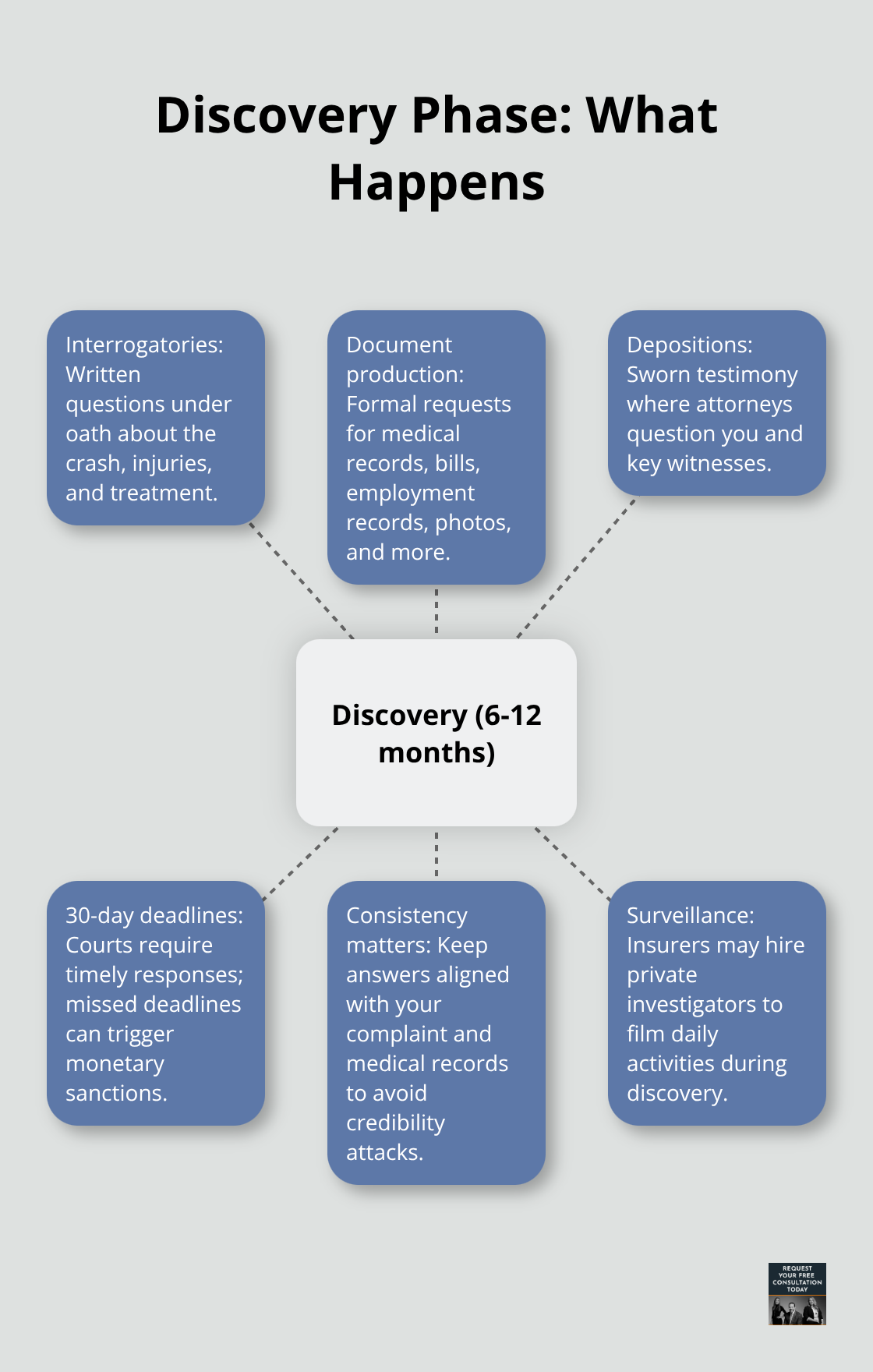
Defense attorneys use discovery to find inconsistencies in your story and minimize your damages, which means your answers must remain consistent with your initial complaint and medical records. Insurance companies often hire private investigators during discovery who film accident victims to prove their injuries aren’t as severe as claimed.
Discovery Phase Reveals Case Strength
Both sides must produce all relevant documents within 30 days of formal requests, and this exchange often reveals the true strength of each party’s position. Defense teams request your complete medical history (including pre-accident conditions), employment records, tax returns, and social media accounts to find evidence that contradicts your injury claims. You gain access to the defendant’s insurance policy limits, internal claim files, and any accident reconstruction reports they commissioned. Medical records from all treating physicians must include original signatures and treatment notes, not just billing summaries. The discovery process costs each side $10,000-20,000 in attorney fees and court costs, which creates financial pressure for early resolution.
Mediation Conferences Force Realistic Negotiations
California courts require mandatory settlement conferences in 85% of personal injury cases, typically scheduled 4-6 months after discovery concludes. These conferences occur with a retired judge who reviews both sides’ evidence and provides realistic settlement ranges based on similar cases in Santa Cruz County. Settlement offers increase dramatically after discovery reveals the strength of your evidence, with average offers that jump 200-300% compared to pre-lawsuit negotiations according to California judicial statistics. Insurance companies face mounting legal costs that reach $15,000-25,000 by the settlement conference date, which creates financial pressure to resolve cases rather than proceed to trial.
Trial Preparation Requires Extensive Work
Only 3% of personal injury lawsuits actually reach trial in California, but trial preparation begins months before your court date and requires extensive witness preparation, medical testimony coordination, and evidence presentation plans. Jury selection alone takes 1-2 days, followed by opening statements, witness testimony, and closing arguments that typically span 3-5 days for car accident cases. Your medical providers must testify about your injuries and treatment costs, while accident reconstruction professionals present evidence about fault determination.
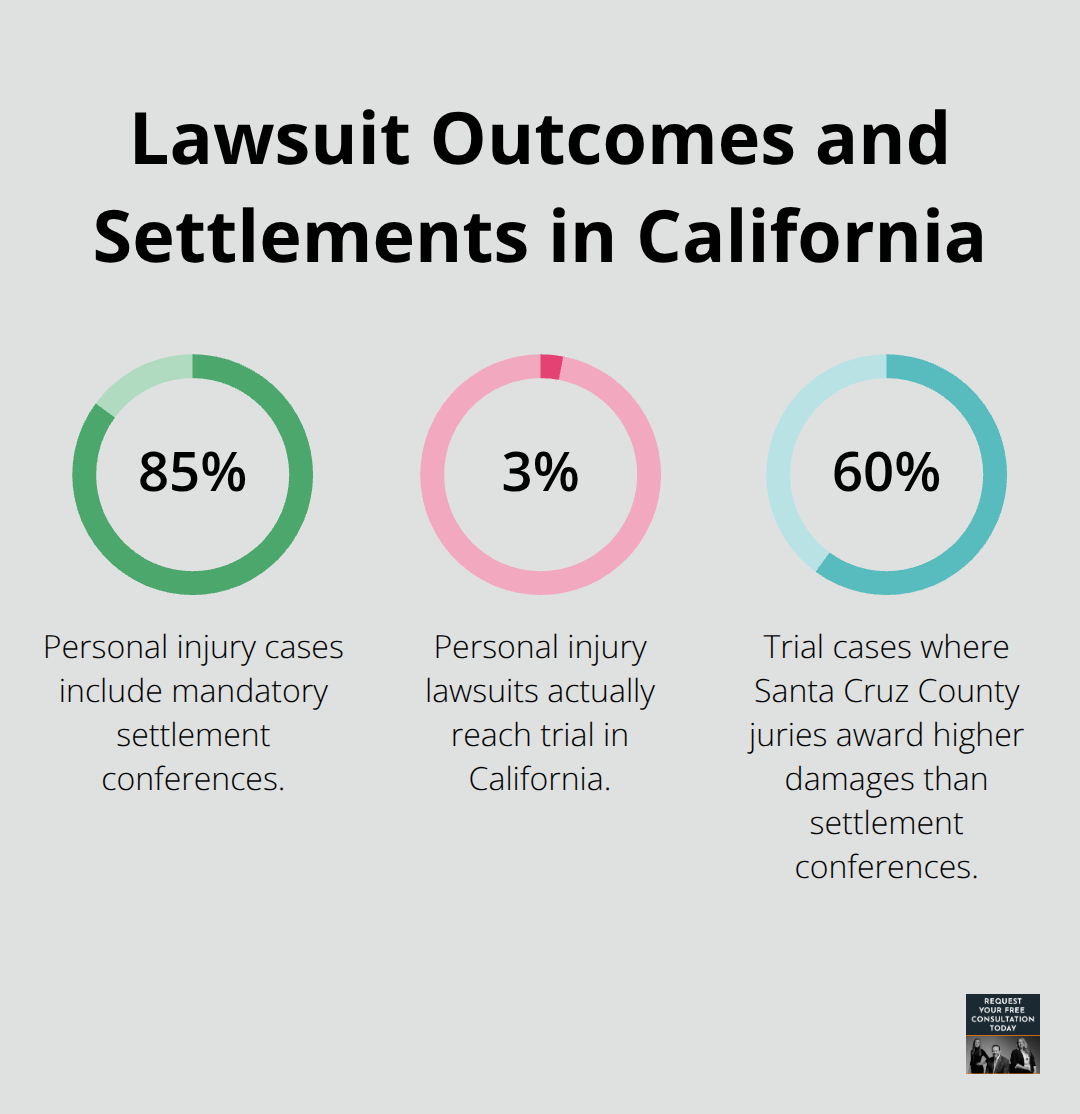
Santa Cruz County juries award higher damages than settlement conferences in 60% of cases that proceed to trial, but the financial and emotional costs of trial often exceed the additional compensation received.
Final Thoughts
Your car accident injury lawsuit success depends on three key factors: complete evidence documentation, adherence to all legal deadlines, and consistent medical treatment records. Cases with complete police reports, witness statements, and original medical records settle for 40% higher amounts than incomplete claims. The two-year statute of limitations in California creates an absolute deadline that destroys your case if missed, while gaps in medical treatment give insurance companies ammunition to dispute your injury severity.
Legal representation transforms your lawsuit outcome dramatically. Attorneys who handle personal injury cases understand California’s comparative negligence laws and know how to counter insurance company tactics that reduce settlements. Self-represented plaintiffs accept settlements that average 60% lower than those with legal counsel (according to California judicial data).
Santa Cruz County accident victims should act immediately after their crash to protect their legal rights. Document everything, seek consistent medical care, and avoid recorded statements to insurance adjusters. We at Schaar & Silva LLP handle your legal case while you focus on recovery from your car accident injury lawsuit.
