

Back and neck injuries happen in 43% of all vehicle collisions in California, making them the most frequent type of accident-related trauma. These injuries often develop symptoms hours or days after the crash, catching many people off guard.
We at Schaar & Silva LLP see how proper immediate response can make the difference between quick recovery and months of pain. Taking the right steps protects both your health and legal rights.
What to Do Immediately After Your Car Accident
Seek Medical Care Within Hours of the Crash
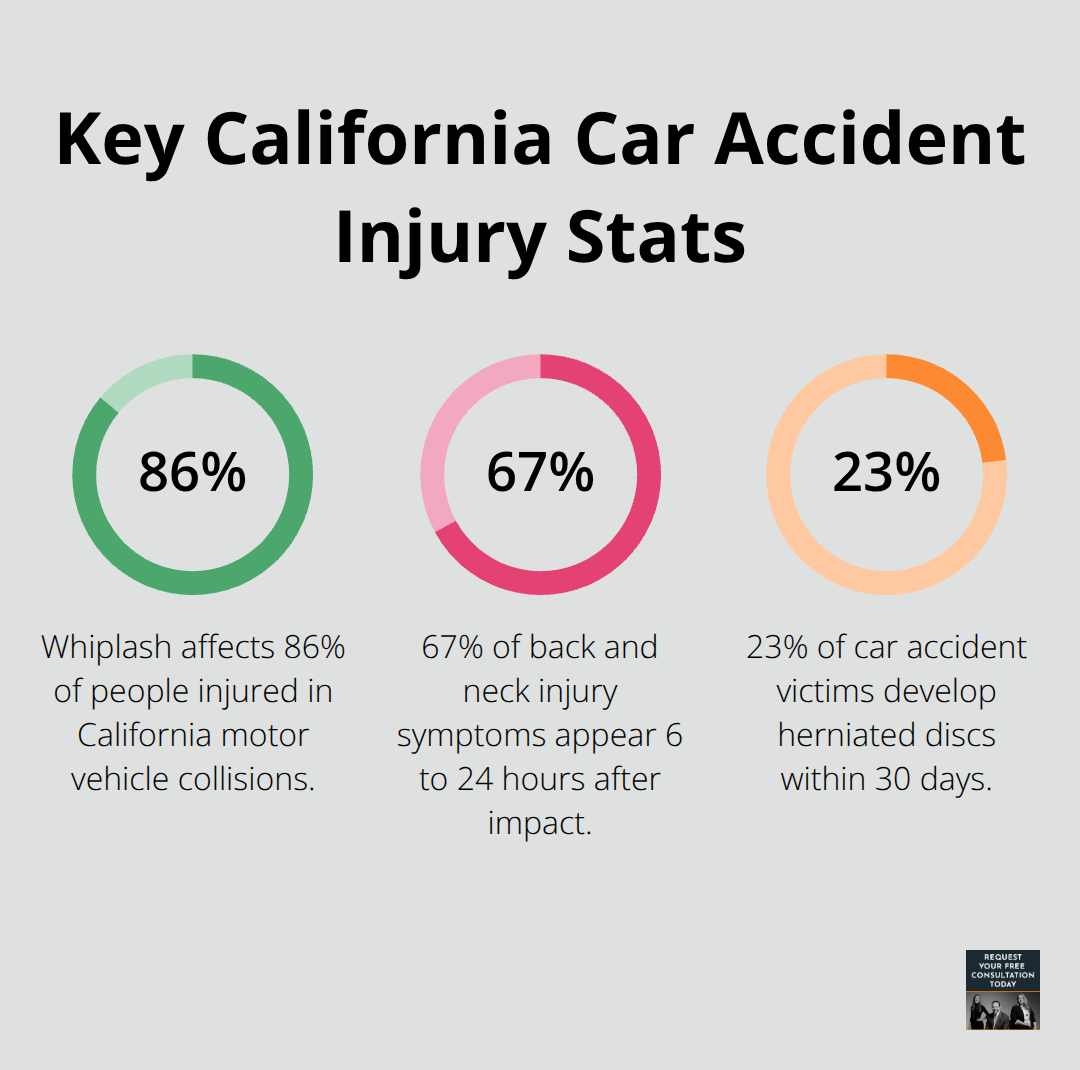
You must get medical attention within the first few hours after your crash, even when you feel fine. California emergency room data shows that 67% of back and neck injury symptoms appear 6 to 24 hours after impact, not immediately. Adrenaline masks pain and inflammation, which creates a false sense of health. Walk into an urgent care center or emergency room and tell them about the accident. Medical professionals will perform X-rays or CT scans to rule out fractures, and this visit creates an official medical record that links your injuries to the crash.
Document Everything Before You Leave the Scene
Take photos of vehicle damage from multiple angles, the accident location, and any visible injuries like bruises or swelling. Write down the exact time, weather conditions, and how the collision happened while details remain fresh in your memory. California Highway Patrol reports that accident victims who document the scene within 30 minutes provide 40% more accurate statements than those who wait.
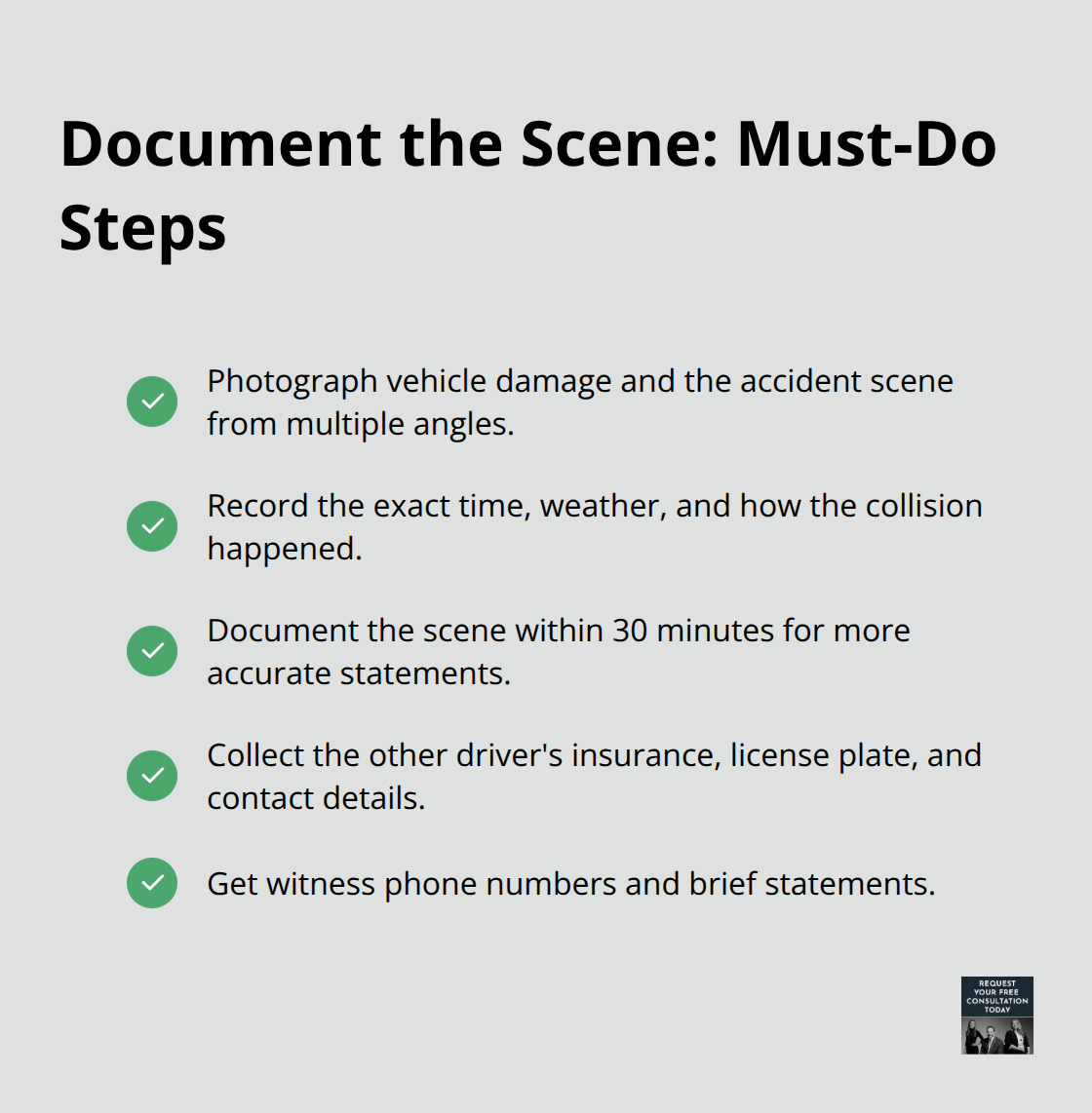
Get the other driver’s insurance information, license plate number, and contact details. Ask witnesses for their phone numbers and a brief statement about what they saw.
Contact Your Insurance Company Within 24 Hours
Report the accident to your insurance carrier immediately, but stick to basic facts without fault admission or injury downplay. Insurance companies in California must respond to claims within 15 days, but early reports speed up the process. Tell them you sought medical attention and provide the medical facility’s name and your claim number. Keep detailed records of all conversations (include the representative’s name and reference numbers). Your insurance will coordinate with the other driver’s carrier to handle property damage and initial medical expenses while you focus on recovery.
These immediate steps protect your health and legal position. The type of back and neck injuries you might face varies significantly based on collision force and direction.
What Back and Neck Injuries Should You Expect
Whiplash Dominates California Emergency Rooms
Whiplash affects 86% of people injured in motor vehicle collisions according to recent California medical data, which makes it the most common injury you’ll face after a crash. Your head snaps forward and backward during impact and stretches neck muscles and ligaments beyond their normal range. Emergency room physicians see whiplash symptoms develop 6 to 72 hours after accidents, with peak pain that hits around day three. The injury damages soft tissues that don’t show up on standard X-rays, which explains why many people leave hospitals and think they’re fine only to wake up in severe pain the next morning.
Women experience whiplash at rates 5.8% higher than men due to differences in neck muscle strength and head position during collisions.
Herniated Discs Create Long-Term Problems
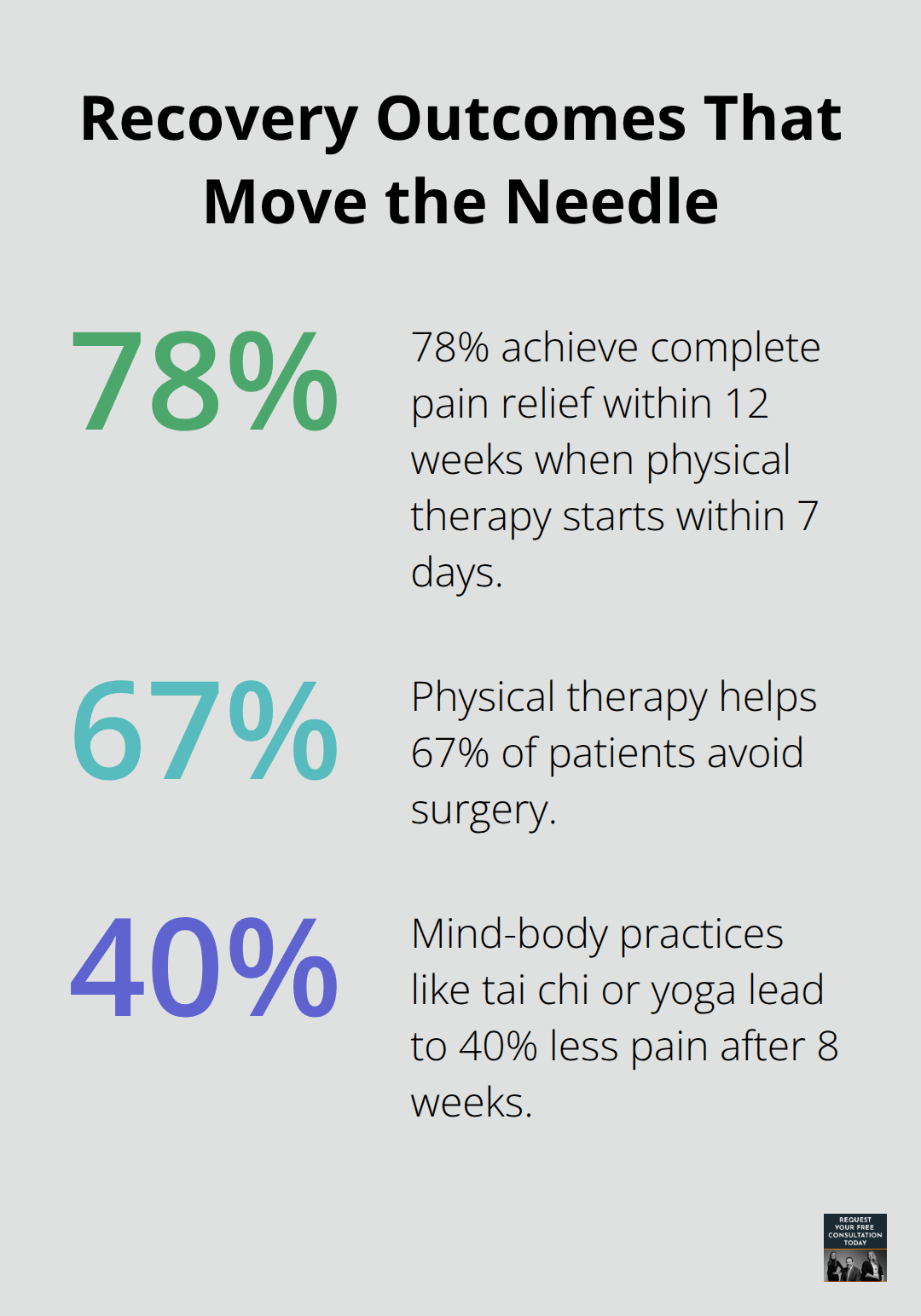
Herniated discs occur when collision force compresses your spine and pushes the soft center of spinal discs through their outer shell. California spine treatment centers report that 23% of car accident victims develop herniated discs within 30 days of their crash. The injury creates pain that shoots down your arms or legs, numbness in fingers or toes, and muscle weakness that interferes with daily activities. MRI scans detect herniated discs that CT scans miss, which means you need the right tests to get an accurate diagnosis. Physical therapy helps 67% of patients avoid surgery, but recovery takes 6 to 12 weeks with consistent treatment.
Muscle Strains Cause Hidden Complications
Back muscle strains happen when sudden impact forces your muscles to contract violently and tear muscle fibers while they create inflammation that restricts movement. These injuries cause deep, aching pain that worsens with movement and can last 8 to 12 weeks without proper treatment. California workers’ compensation data shows that untreated muscle strains lead to chronic pain in 34% of cases (which makes early intervention vital for full recovery).
Ligament Sprains Affect Joint Stability
Ligament sprains occur when your spine twists unnaturally during impact and stretch or tear the tough bands of tissue that connect your vertebrae. These injuries create stiffness and instability that makes simple movements like turning your head or bending forward extremely painful. Medical studies show that ligament sprains take longer to heal than muscle strains because ligaments receive less blood flow than muscles (typically requiring 10 to 16 weeks for complete recovery).
Each of these injuries requires different treatment approaches to achieve full recovery and prevent long-term complications.
What Recovery Methods Work Best
Physical Therapy Delivers the Fastest Results
Physical therapy stands as your most effective path to full recovery, with California rehabilitation centers reporting 78% of car accident victims achieve complete pain relief within 12 weeks when they start treatment within 7 days of their crash. DeWitt Physical Therapy in Santa Cruz has helped patients since 2011 and uses movement preparation, training, and recovery strategies that target the specific muscles and joints your collision damaged.
Your physical therapist will assess your range of motion through precise measurements and create exercises that gradually rebuild strength without additional injury. Blood flow restriction training reduces joint strain while it builds muscle strength during rehabilitation (which speeds recovery by 35% compared to traditional methods according to recent sports medicine research).
Medical Treatments That Actually Reduce Pain
Over-the-counter medications like ibuprofen and acetaminophen control mild to moderate pain effectively for the first 2-3 weeks, but prescription muscle relaxants become necessary when inflammation restricts movement. California pain management clinics use specific antidepressants like duloxetine to treat nerve pain that radiates down arms or legs from herniated discs. Transcutaneous electrical nerve stimulation provides short-term relief when it blocks pain signals, while steroid injections directly into inflamed joints reduce swelling for 3-6 months. Heat therapy applied for 15 minutes every few hours increases blood flow to damaged tissues, but ice works better during the first 48 hours to control initial inflammation.
Sleep and Movement Accelerate Healing
Sleep quality affects recovery speed more than most people realize, with studies that show 7-8 hours of uninterrupted sleep reduces healing time by 25% compared to fragmented rest. Your body repairs damaged tissues most effectively during deep sleep phases (which makes consistent sleep schedules essential for recovery). Regular movement prevents scar tissue formation that creates permanent stiffness, which means you must walk for 20-30 minutes daily for complete recovery. Ergonomic workplace modifications prevent additional strain on healing tissues, including monitor height adjustments and lumbar support cushions that maintain proper spinal alignment.
Alternative Therapies Provide Additional Relief
Mind-body therapies like tai chi and yoga reduce chronic pain and stiffness while they improve flexibility, with participants who show 40% less pain after 8 weeks of consistent practice. Acupuncture offers some relief from neck pain according to limited studies, though results vary between individuals. Chiropractic adjustments may benefit those with whiplash when combined with physical therapy and exercise programs that address the underlying muscle weakness.
Final Thoughts
Proper medical documentation creates the foundation for both your recovery and legal protection after a back and neck injury after car accident. California courts require clear medical records that link your injuries directly to the collision. Every doctor visit and treatment session becomes evidence in your case.
Your legal rights extend beyond immediate medical bills. California law allows you to seek compensation for lost wages, future medical expenses, and pain that affects your daily life. The two-year statute of limitations starts from your accident date (which makes prompt legal consultation vital for your interests).
Recovery requires a comprehensive approach that combines medical treatment, physical therapy, and proper legal representation. We at Schaar & Silva LLP help Santa Cruz County residents navigate the complex legal process while we connect you with medical lien services and psychological support resources. Our team handles property damage claims and medical bill assistance so you can focus entirely on recovery.
