

A hip injury from car accident can change your life in seconds. The pain, medical bills, and lost wages create overwhelming stress when you should focus on healing.
We at Schaar & Silva LLP understand the physical and financial challenges you face after a serious collision in Santa Cruz County. Taking the right steps immediately after your accident protects both your health and your legal rights.
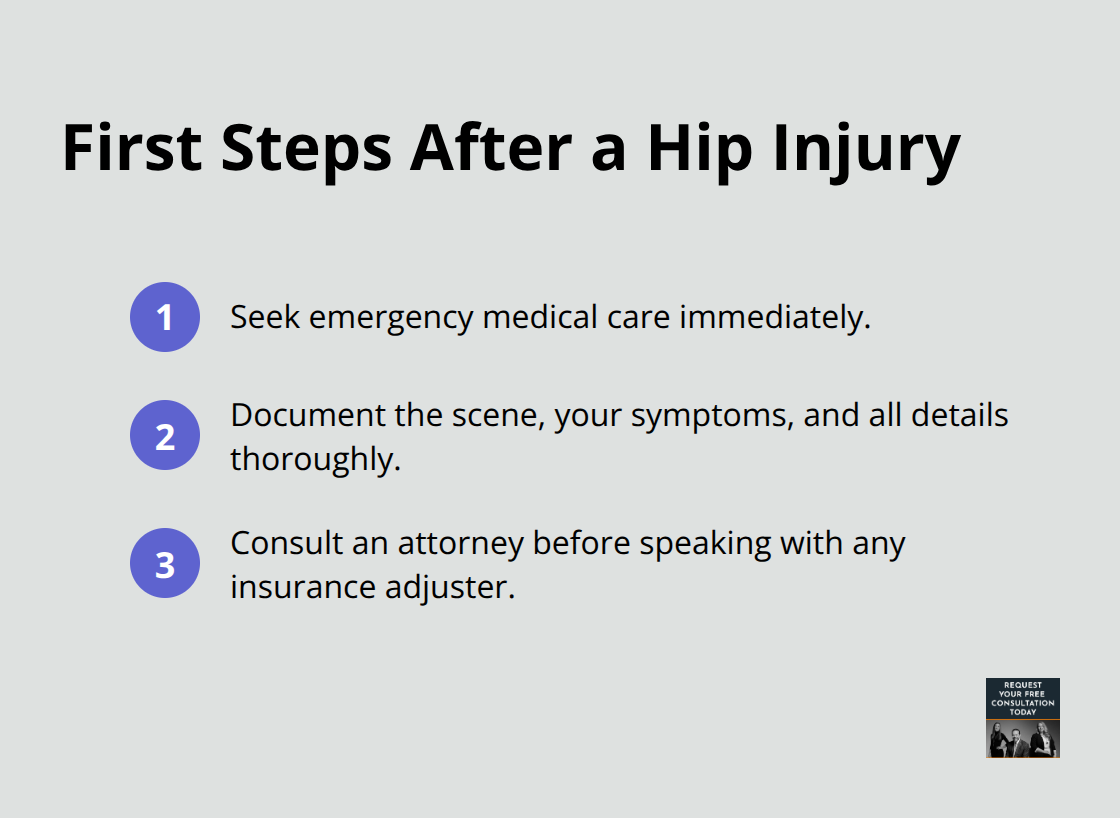
What Should You Do Right After a Hip Injury?
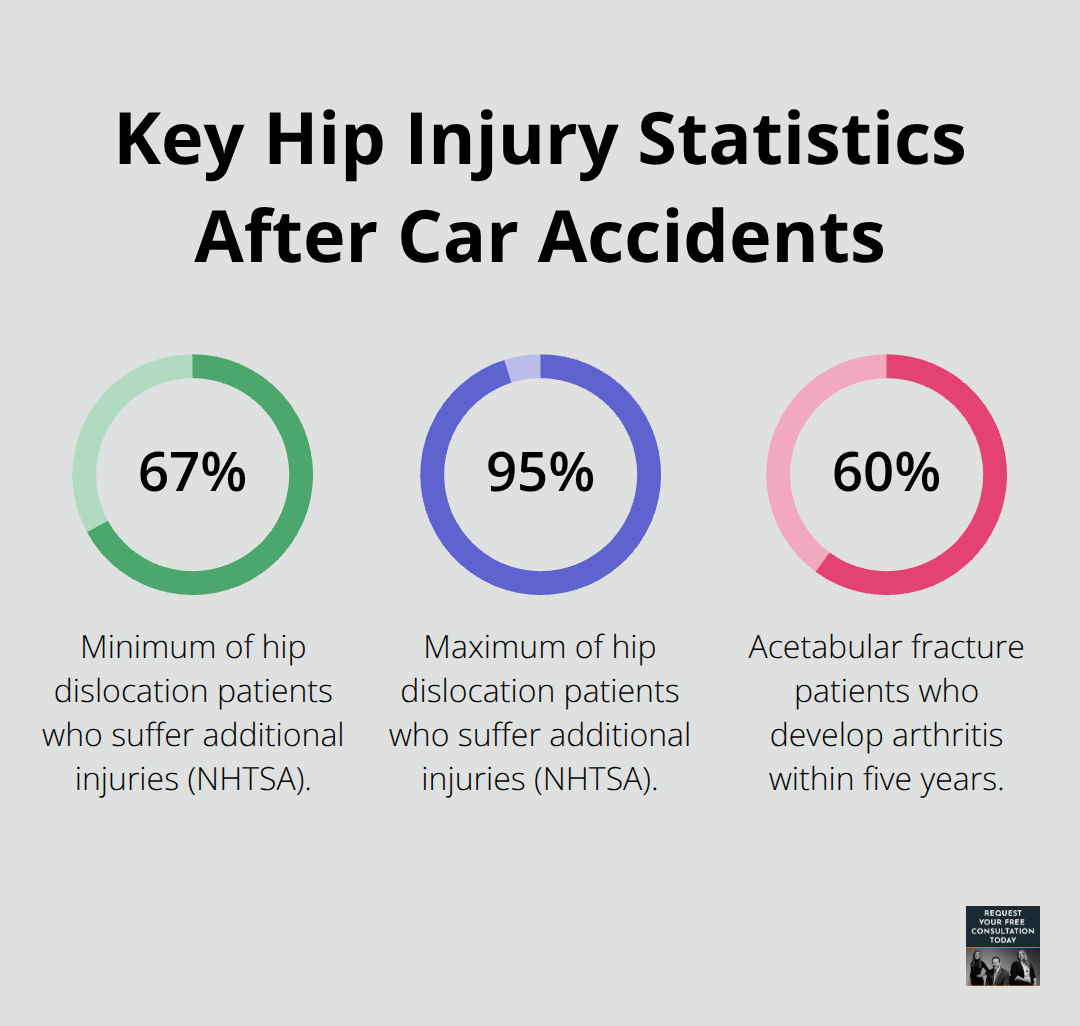
Your first hour after a hip injury determines both your recovery outcome and legal case strength. Statistics from the National Highway Traffic Safety Administration show that 67 to 95 percent of hip dislocation patients suffer additional injuries, which makes immediate medical evaluation non-negotiable. Even if you feel capable of walking, hip labral tears and fractures often mask their severity initially.
Emergency room physicians use X-rays, CT scans, and MRIs to identify hidden damage that worsens without proper treatment.
Get Medical Attention Within Minutes
Call 911 immediately rather than drive yourself to urgent care. Hip injuries from vehicle collisions frequently involve acetabular fractures in 53.92 percent of cases according to recent orthopedic studies. Emergency responders stabilize your spine and hip joint properly during transport. Request that medical staff document every symptom you experience, including pain levels, mobility restrictions, and numbness. Getting the right medical care immediately can make the difference between full recovery and permanent disability. Michigan’s No-Fault law requires you to file benefit applications within one year, but medical documentation created within hours of your accident carries significantly more weight with insurance companies.
Document Everything Before Memory Fades
Take photos of vehicle damage, your seating position, and any visible injuries while you wait for medical care. Insurance companies routinely deny claims when injury documentation occurs days after accidents. Record the other driver’s insurance information, license plate, and contact details immediately. Write down exactly how the collision happened while details remain fresh. Your phone’s voice recorder captures this information faster than handwriting.
Medical bills from hip injuries average thousands of dollars for conservative treatment and tens of thousands for surgical repair, making thorough documentation your financial protection.
Contact Legal Representation Before Insurance Adjusters
Insurance adjusters contact accident victims within hours, often before you understand your injury’s full scope. Their goal involves minimizing payouts, not protecting your interests. Legal counsel should review your case before you provide recorded statements to any insurance company. Hip injury settlements vary dramatically based on legal representation quality and case preparation thoroughness. Professional legal guidance protects your right to compensation for medical bills, lost wages, and future treatment costs while you focus on healing.
The next step involves understanding exactly what type of hip injury you sustained and how it will affect your daily life and future mobility.
Understanding Hip Injuries from Car Accidents
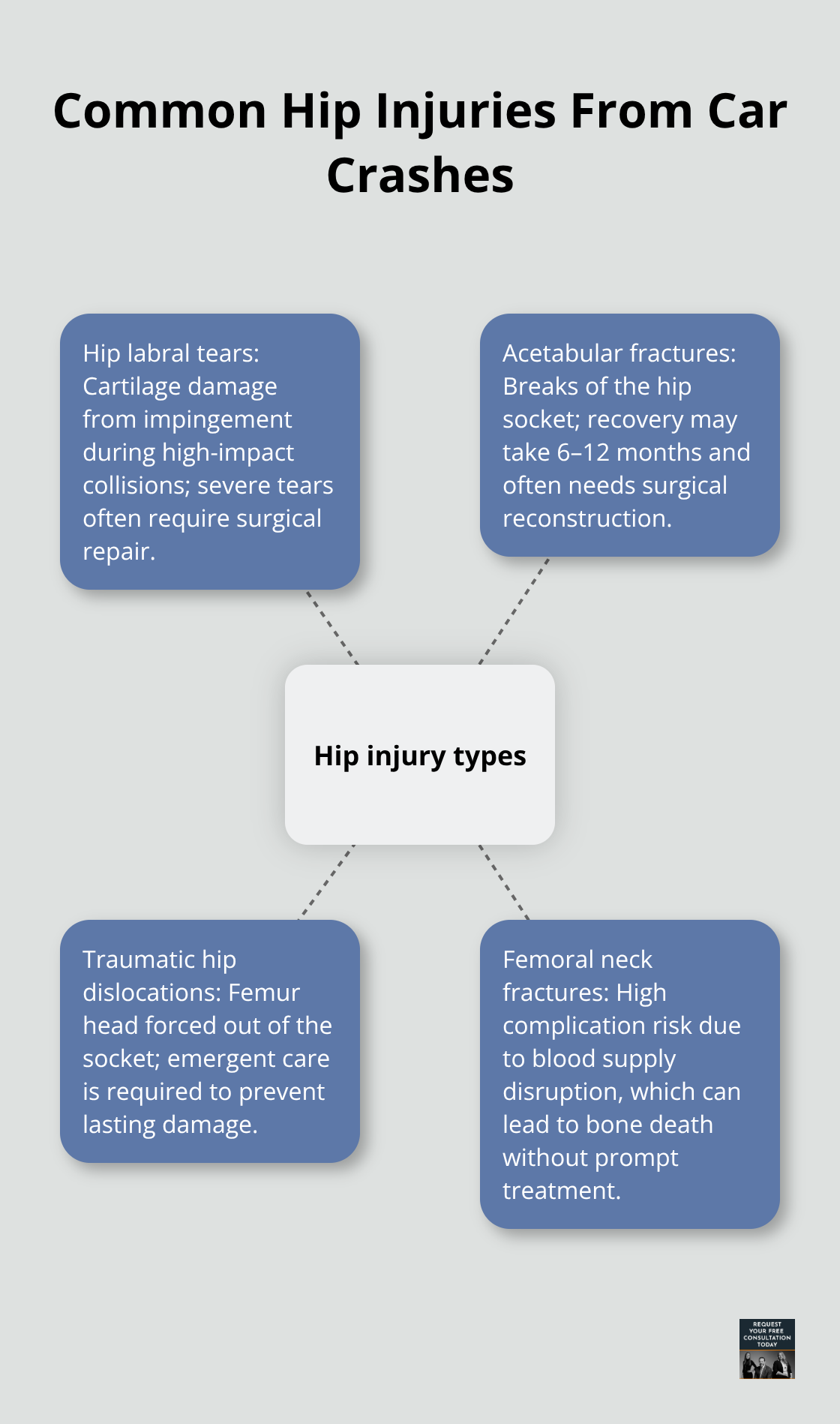
Hip injuries from vehicle collisions fall into distinct categories that determine your recovery path and compensation needs. Acetabular fractures affect the hip socket in 53.92 percent of car accident cases according to orthopedic research, while hip labral tears damage the cartilage that protects joint movement. Traumatic hip dislocations occur when extreme force separates the femur head from the socket and create emergency situations that require immediate surgical intervention. Femoral neck fractures near the hip joint carry the highest risk for complications because blood supply disruption leads to bone death without prompt treatment.
Hip Labral Tears Require Surgical Repair
Hip labral tears damage the cartilage lining the hip socket and commonly result from femoroacetabular impingement during high-impact collisions. Conservative treatment through physical therapy and anti-inflammatory medication works only for minor tears, but surgical repair remains the sole definitive solution for severe damage. Patients experience constant dull aches or sharp pain depending on tear severity, along with clicking or popping sensations during movement. Over-the-counter NSAIDs like ibuprofen and naproxen help manage inflammation temporarily, yet they cannot restore torn cartilage.
Acetabular Fractures Demand Extended Recovery
Acetabular fractures break the hip socket bone and occur in more than half of all car accident hip injuries. These fractures require six to twelve months before normal activity returns, with many patients needing surgical reconstruction using metal plates and screws. Hip arthroscopy surgery for labral tears requires four to six months of recovery time based on Cleveland Clinic data. Corticosteroid injections provide temporary relief for inflammation but cannot repair fractured bone or restore joint stability.
Long-Term Mobility Restrictions Change Daily Life
Hip injuries create permanent mobility restrictions that affect employment capacity and daily independence. Arthritis develops in 60 percent of acetabular fracture patients within five years (requiring ongoing medical management and potential joint replacement surgery). Physical therapy becomes a lifelong necessity rather than temporary treatment, with costs reaching thousands annually. Most patients walk within days after hip dislocation repair, but high-impact activities remain unsafe for months during recovery.
These mobility changes directly impact your ability to work and maintain your previous quality of life, which makes understanding your legal rights and available compensation options vital for your financial security.
Legal Rights and Compensation for Hip Injuries
Hip injury compensation extends far beyond immediate medical bills and includes multiple damage categories that insurance companies often minimize or ignore. Medical expenses form the foundation of your claim and cover emergency room visits, diagnostic tests, surgical procedures, physical therapy, prescription medications, and future treatment costs related to your hip injury. Wage loss compensation includes both immediate income you cannot earn during recovery and reduced capacity if your hip injury prevents you from returning to your previous job or working full hours. Pain and suffering damages compensate for physical discomfort, emotional distress, and lifestyle restrictions that hip injuries create (with settlements typically ranging from three to five times your medical expenses for severe injuries).
Medical Documentation Creates Your Case Foundation
Medical documentation created within hours of your accident carries significantly more weight than delayed treatment records when you prove injury causation. Request copies of all emergency room reports, diagnostic test results, and physician notes from your initial treatment and every follow-up appointment. Hip arthroscopy surgery costs average $15,000 to $30,000 according to healthcare data, while acetabular fracture reconstruction can exceed $50,000 including hospital stays and rehabilitation. Insurance companies scrutinize treatment gaps longer than 72 hours after accidents, so maintain consistent medical care even if pain levels fluctuate. Physical therapy records document functional limitations and recovery progress that directly support your wage loss and pain claims.
California Fault Rules Affect Your Recovery
California operates under comparative fault rules, which means you can recover damages even if you bear partial responsibility for the accident. Police reports provide initial fault determinations, but witness statements, traffic camera footage, and accident reconstruction analysis often prove more valuable when you establish liability. Vehicle damage patterns frequently contradict driver statements about collision circumstances (making professional accident reconstruction analysis worth the investment for high-value hip injury cases). Personal injury attorneys settle cases faster when fault evidence appears overwhelming, often paying full policy limits rather than risking jury verdicts that exceed their financial exposure.
Final Thoughts
Time works against you after a hip injury from car accident. Medical documentation created within hours carries more legal weight than delayed treatment records. Insurance companies routinely deny claims when injury documentation occurs days after accidents.
Professional legal representation maximizes your compensation by handling insurance negotiations while you focus on healing. Hip injury settlements vary dramatically based on legal counsel quality and case preparation thoroughness. We at Schaar & Silva LLP understand the physical and financial challenges you face after serious collisions in Santa Cruz County (and we assist with medical bill management and property damage claims).
Your recovery requires full attention to medical treatment and rehabilitation. Schaar & Silva LLP handles the legal complexities while you concentrate on regaining mobility and returning to normal life. Acting quickly protects both your health outcomes and legal rights when hip injuries threaten your future.