

Car accidents resulting in death claim over 38,000 lives annually in the United States. These tragedies devastate families and communities across Santa Cruz County and beyond.
We at Schaar & Silva LLP understand the profound impact these incidents have on survivors. Most fatal crashes stem from preventable behaviors that drivers can control through awareness and responsible choices.
What Behaviors Cause Most Fatal Crashes
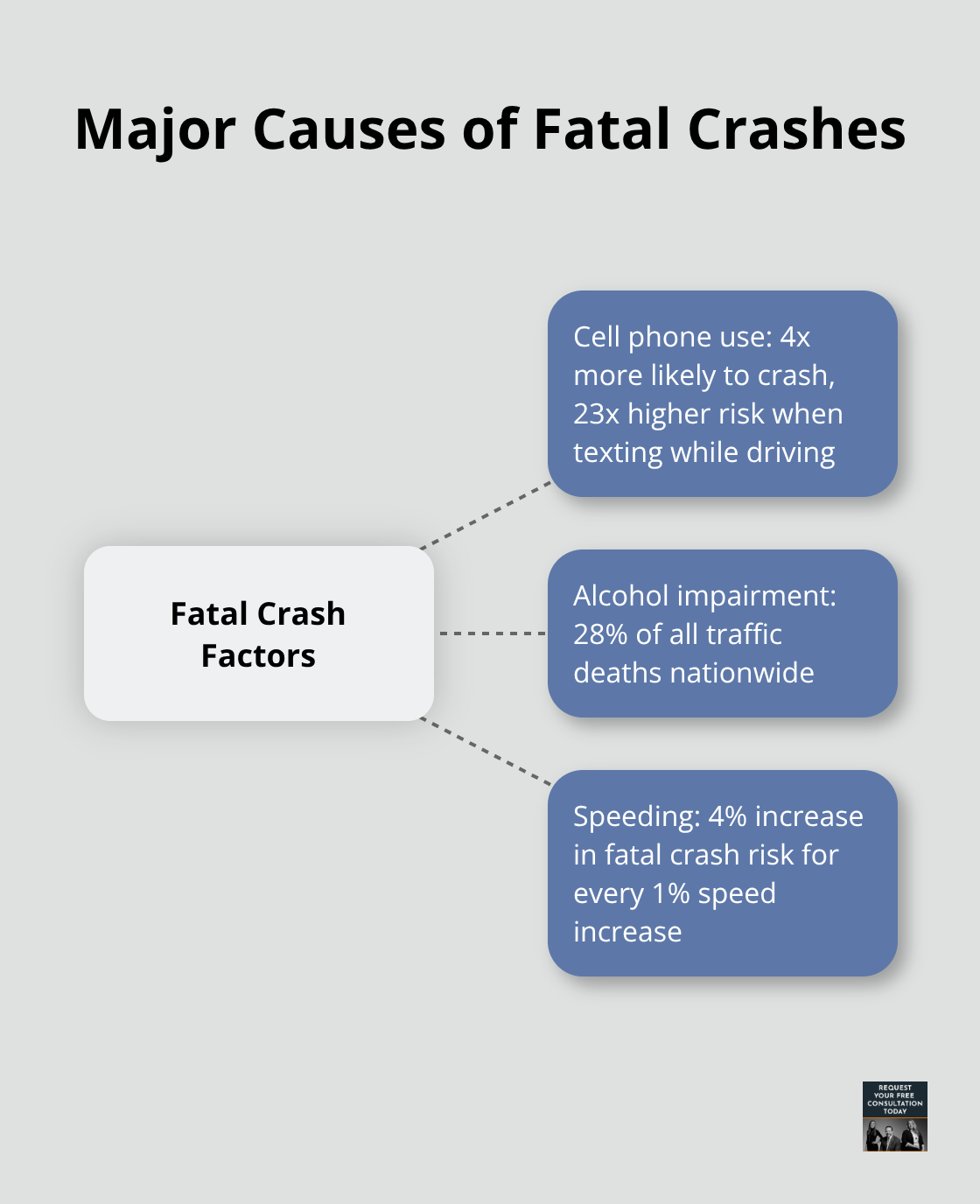
Three driving behaviors account for the majority of fatal accidents across Santa Cruz County and nationwide. Cell phone use while driving creates a reaction time delay equivalent to having a blood alcohol content of 0.08, according to research from the University of Utah. The National Safety Council reports that drivers who use phones are four times more likely to crash, yet 660,000 drivers still use devices during daylight hours daily. Texting while driving increases crash risk by 23 times, making it deadlier than drunk driving in many scenarios.
Impaired Driving Deaths Continue to Rise
Alcohol-related fatalities represent 28% of all traffic deaths nationwide, with Santa Cruz County recording 18 alcohol-involved crashes in 2021 alone. Drivers aged 21 to 34 had the highest alcohol-related incidents locally, accounting for six fatalities. The Office of Traffic Safety ranks Santa Cruz County 56th out of 105 California counties for DUI arrests, with 100 arrests recorded. Drug impairment adds another layer of danger, as marijuana use doubles crash risk and prescription medications can impair driving for up to 24 hours after consumption.
Speed Kills More Than Expected
Speed-related collisions caused 19 fatal and injury accidents in Santa Cruz County during 2021. Research shows that a mere 1% increase in average speed correlates to a 4% rise in fatal crash risk. Pedestrians face a 4.5 times higher death risk when struck by vehicles traveling 65 km/h versus 50 km/h (approximately 40 mph versus 31 mph). Nighttime speeding proves particularly deadly, with fatal crashes occurring three times more frequently between 9 PM and 3 AM compared to daytime hours.
Additional Risk Factors
Motorcycles were involved in 14 fatal or injury collisions within Santa Cruz County, while bicyclists faced 49 accidents. Hit-and-run collisions totaled 13 incidents, leaving victims without immediate help. These statistics highlight how various vehicle types and driver behaviors contribute to the county’s accident rates. Understanding these patterns helps identify the most effective prevention strategies that can save lives on local roads.
How Technology and Smart Planning Prevent Deaths
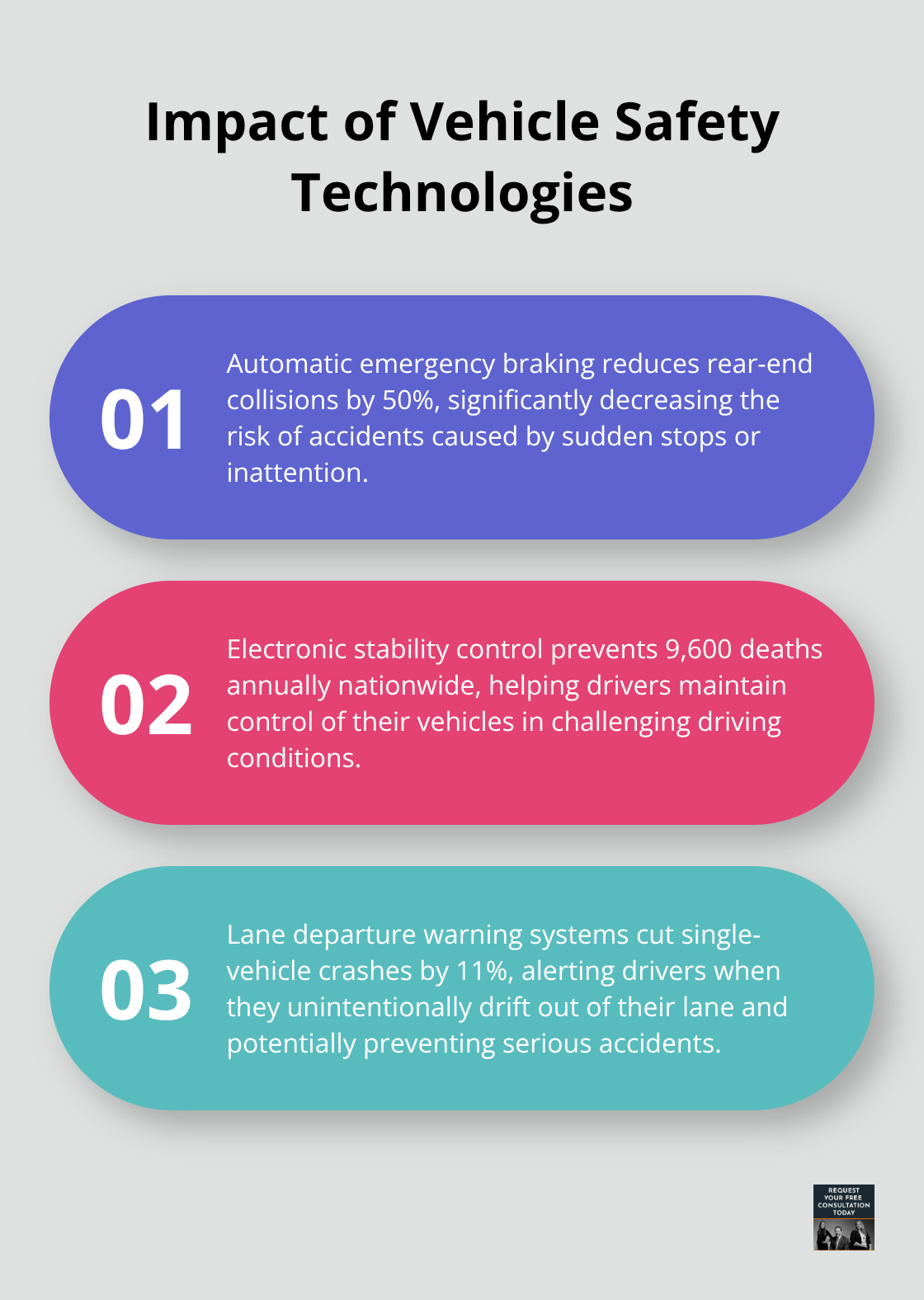
Modern vehicles with automatic emergency braking reduce rear-end collisions by 50%, according to the Insurance Institute for Highway Safety. Electronic stability control prevents 9,600 deaths annually nationwide, while airbags save over 2,800 lives each year. Lane departure warning systems cut single-vehicle crashes by 11%, and blind spot monitoring reduces lane-change accidents by 14%. These technologies work best when drivers understand their limitations and maintain active engagement behind the wheel.
Smart Road Design Saves More Lives Than Expected
Roundabouts reduce fatal crashes by 90% compared to traditional intersections, according to Federal Highway Administration data. Median barriers on divided highways prevent 46% of opposite-direction crashes, while rumble strips cut run-off-road accidents by 37%. Santa Cruz County benefits from targeted improvements like better lighting on Highway 1, upgraded crosswalks downtown, and enhanced signage near schools. Traffic calming measures including speed bumps and narrower lanes force drivers to slow down naturally. Red light cameras reduce fatal crashes at intersections by 21% (though they remain controversial among local drivers).
Education Programs That Actually Change Behavior
High school driver education programs that include crash simulations reduce teen accident rates by 24% within the first year. The California Office of Traffic Safety funds local campaigns that focus on specific behaviors like seat belt use, which saves up to 15,000 lives annually nationwide. Community-based programs that target repeat DUI offenders show 40% lower recidivism rates when combined with ignition interlock devices. Motorcycle safety courses reduce crash rates by 30% for participants, while bicycle safety education in schools cuts child cyclist injuries by 18%. These programs work because they address specific local risks rather than generic safety messages.
The Reality of Prevention Limits
Even the most advanced safety measures cannot eliminate all fatal accidents. Technology fails, road improvements take years to implement, and education programs reach only willing participants. When prevention fails and tragedy strikes, families face overwhelming legal and financial challenges that require immediate professional guidance.
What Legal Penalties Do Fatal Accident Drivers Face
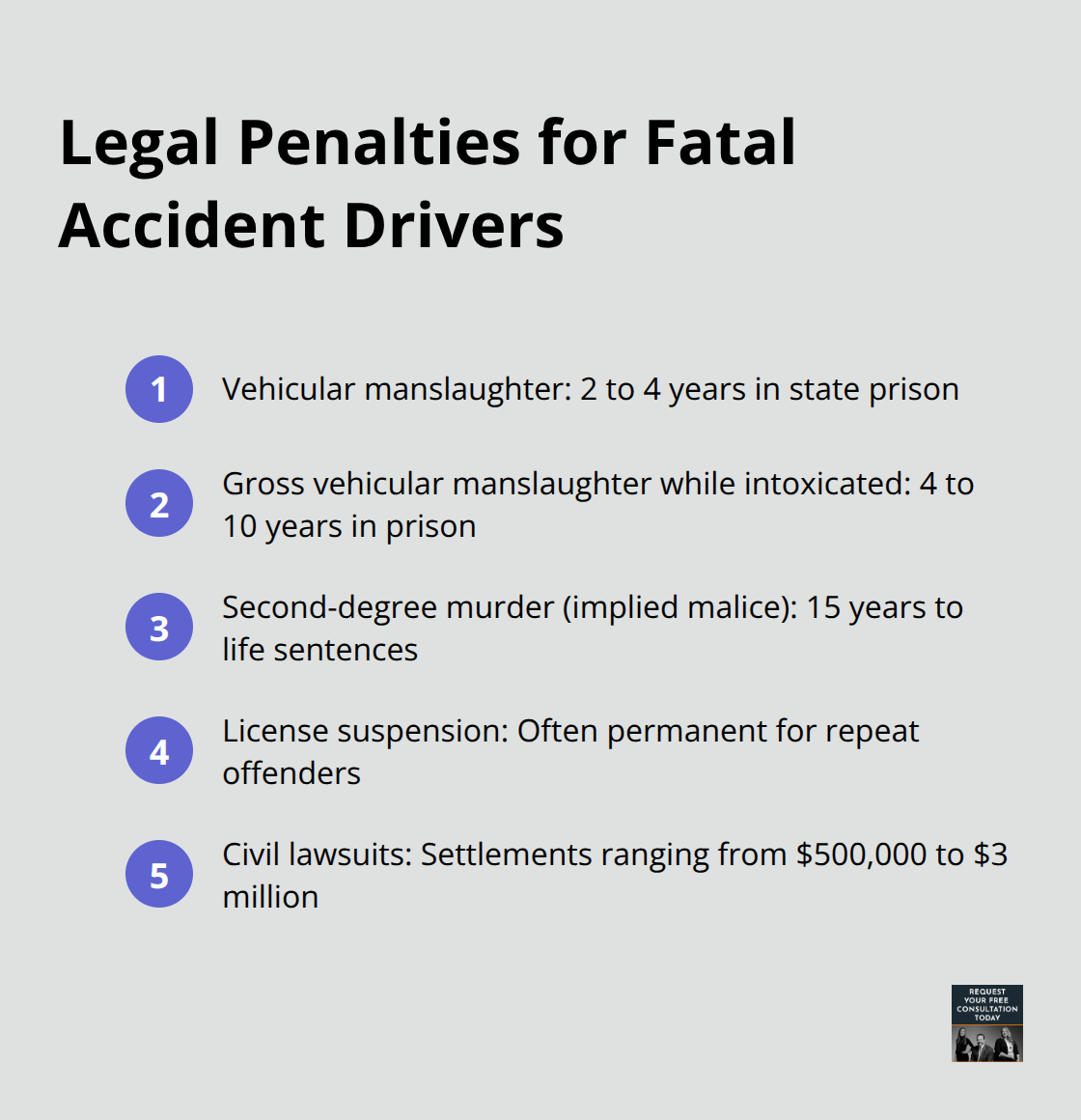
At-fault drivers in fatal accidents face severe criminal penalties that escalate rapidly based on circumstances. Vehicular manslaughter charges carry 2 to 4 years in state prison, while gross vehicular manslaughter while intoxicated brings 4 to 10 years behind bars according to California Penal Code. Second-degree murder charges apply when drivers show implied malice (such as racing or extreme DUI cases), which results in 15 years to life sentences. The California Department of Motor Vehicles automatically suspends licenses for fatal DUI cases, often permanently for repeat offenders.
Civil Lawsuits Bring Million-Dollar Judgments
Wrongful death lawsuits in Santa Cruz County typically result in settlements that range from $500,000 to $3 million based on victim age and income capacity. California allows families to recover economic damages that include lost future income, medical expenses, and funeral costs plus non-economic damages for pain and distress. Punitive damages multiply awards when drivers act with gross negligence, often triple total compensation. Insurance companies fight aggressively to minimize payouts and frequently offer initial settlements of just 10% to 20% of actual case value. Families struggle with insurance tactics that exploit grief and financial desperation at the most vulnerable time.
Insurance Falls Short When Tragedy Strikes
California’s minimum liability coverage of $15,000 per person proves woefully inadequate for fatal accidents and covers less than 5% of typical wrongful death damages. Uninsured motorist coverage protects families when at-fault drivers lack sufficient insurance, yet 16% of California drivers operate without any coverage whatsoever. Underinsured motorist protection fills gaps when negligent drivers carry only minimum policies, but many families skip this coverage to save money. Life insurance policies often exclude deaths from illegal activities and leave families without expected benefits when victims contribute to accidents through impaired operation or other violations.
Final Thoughts
Car accidents resulting in death stem from three primary behaviors: distracted operation, impaired decisions, and excessive speed. These preventable actions claimed 38,000 lives nationwide last year and devastated families throughout Santa Cruz County. Technology advances and road improvements help reduce fatalities, but personal responsibility remains the strongest defense against tragedy.
Every driver controls their choices behind the wheel. Drivers who put phones away, avoid alcohol and drugs, and respect speed limits can prevent most fatal crashes. When drivers fail to make responsible decisions, the consequences extend far beyond criminal penalties and insurance claims (affecting entire families for years).
Families affected by fatal accidents face overwhelming legal and financial challenges during their darkest hours. Insurance companies often offer inadequate settlements while medical bills and funeral costs mount. We at Schaar & Silva LLP provide comprehensive support for accident victims and their families, and you can contact us to focus on recovery while we handle the legal complexities of your case.
