

Car accidents leave lasting impacts beyond physical injuries. Many Santa Cruz County residents don’t realize they can pursue emotional distress car accident compensation for psychological trauma.
We at Schaar & Silva LLP see clients struggling with anxiety, depression, and PTSD after crashes. California law recognizes these invisible wounds as legitimate damages worth pursuing.
What Qualifies as Emotional Distress After Your Accident
Valid Emotional Distress Claims in California Courts
California courts require concrete proof that your psychological trauma stems directly from the accident and significantly disrupts your daily life. The American Psychological Association reports that 39.2% of car accident survivors develop anxiety disorders within six months. Your emotional distress claim becomes legally viable when symptoms like panic attacks, insomnia, or phobias prevent normal activities. Courts examine whether you can work, socialize, or care for family members as you did before the crash.

Physical Damages Versus Emotional Damages
Physical damages carry clear price tags through medical bills and repair estimates. Emotional damages demand different evidence strategies. California recognizes both economic losses from therapy costs and non-economic pain and suffering like lost enjoyment of life. The state applies multiplier methods from 1.5 to 5 times your documented expenses (based on severity). Victims with PTSD diagnoses typically receive higher multipliers than those with temporary anxiety symptoms.
Psychological Conditions California Law Covers
California law covers specific emotional conditions: Acute Stress Disorder, Post-Traumatic Stress Disorder, major depression, and anxiety disorders. The state requires professional mental health diagnoses within reasonable timeframes after your accident. Phobias related to intersections or highways qualify for compensation. Sleep disorders, panic attacks, and social withdrawal also receive recognition. Your claim strengthens when multiple conditions develop simultaneously, as this demonstrates the accident’s severe psychological impact.
Documentation Requirements for Valid Claims
Courts examine medical records, therapy notes, and prescription histories to validate your emotional distress. Mental health professionals must document your symptoms and connect them directly to the accident. Personal journals that track daily struggles provide powerful evidence. Family members and friends can testify about behavioral changes they observe (such as withdrawal from social activities or increased irritability).
The strength of your emotional distress case depends heavily on how well you document these psychological impacts from the moment they begin.
How Do You Build a Strong Documentation Case
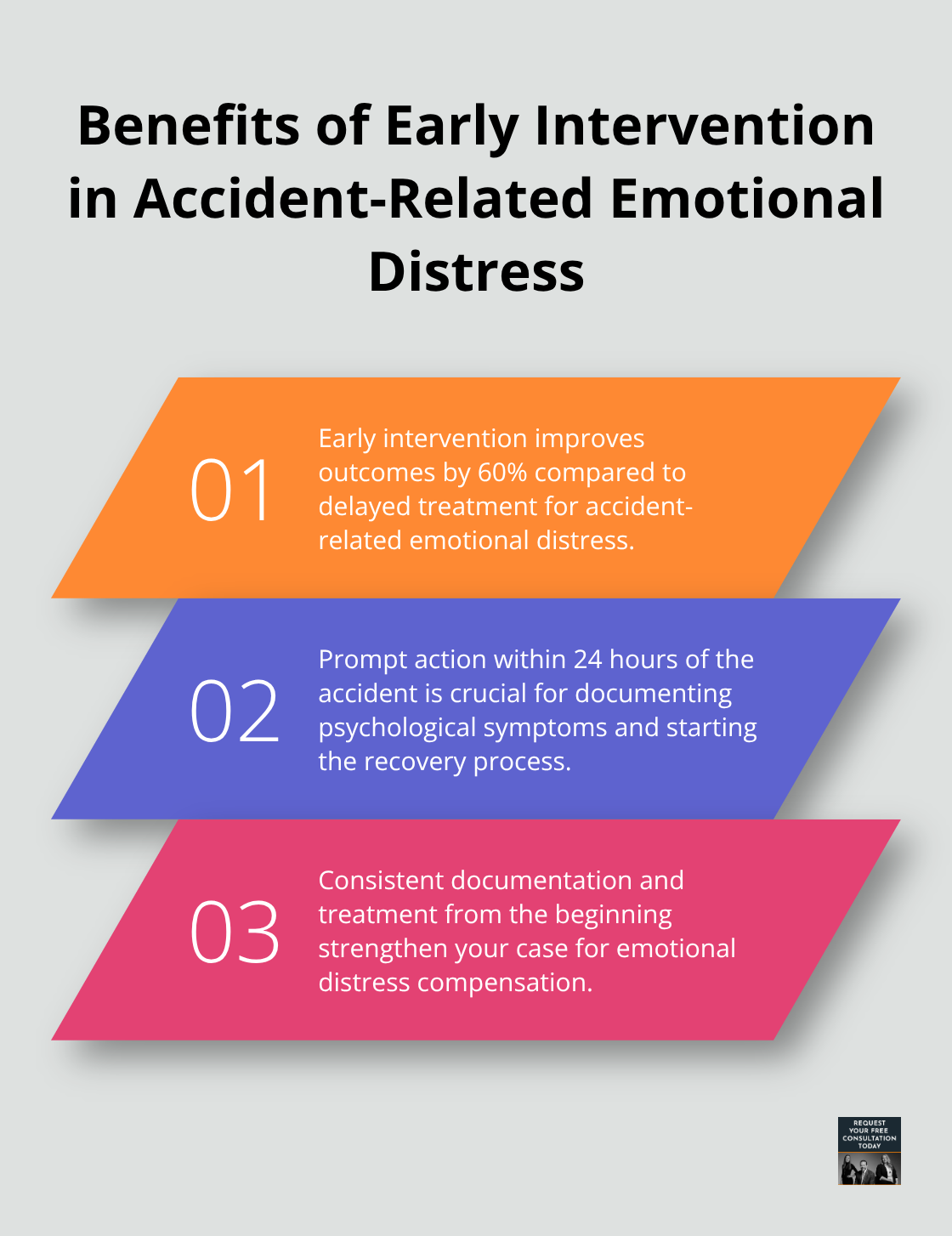
Strong documentation starts the moment you feel psychological symptoms after your accident. California courts demand thorough proof that connects your emotional distress directly to the crash. You must start documentation within 24 hours if possible. The National Institute of Mental Health reports that early intervention improves outcomes by 60% compared to delayed treatment.
Medical Records Form Your Foundation
You should schedule appointments with mental health professionals within the first week after your accident. Therapists, psychiatrists, and psychologists must document your symptoms and explicitly link them to the crash. You need to request copies of all treatment notes, diagnostic reports, and prescription records. Insurance companies scrutinize gaps in treatment, so you must maintain consistent appointments even when you feel better. Your medical team should document specific symptoms like sleep disruption frequency, panic attack intensity, and social withdrawal patterns. These professionals often use standardized assessment tools that provide measurable evidence courts accept.
Personal Journals Create Powerful Evidence
You must write daily entries that describe how the accident affects your life. Record specific incidents like when you avoid certain intersections, cancel social plans, or experience nightmares. Note physical symptoms too – headaches, stomach problems, and muscle tension often accompany emotional distress. Include details about work performance changes, relationship impacts, and activities you no longer enjoy. Courts find handwritten journals more credible than digital entries because they appear less calculated. Date every entry and write consistently, even on good days when symptoms seem minimal.
Third-Party Observations Strengthen Your Case
Family members, friends, and coworkers can provide witness statements about behavioral changes they observe. You should ask them to document specific examples rather than general statements. A coworker who notes you now flinch at car horns carries more weight than someone who says you seem stressed. Supervisors can describe work performance changes or increased sick days (such as frequent absences or missed deadlines). These witnesses should write their observations promptly while memories remain fresh. Their statements become particularly valuable when they describe your personality and behavior before the accident for comparison.
The quality of your documentation directly impacts your compensation amount, but you also need to understand the legal process that transforms this evidence into actual financial recovery.
How Do You Navigate California’s Legal Process
Understanding California’s Filing Deadlines
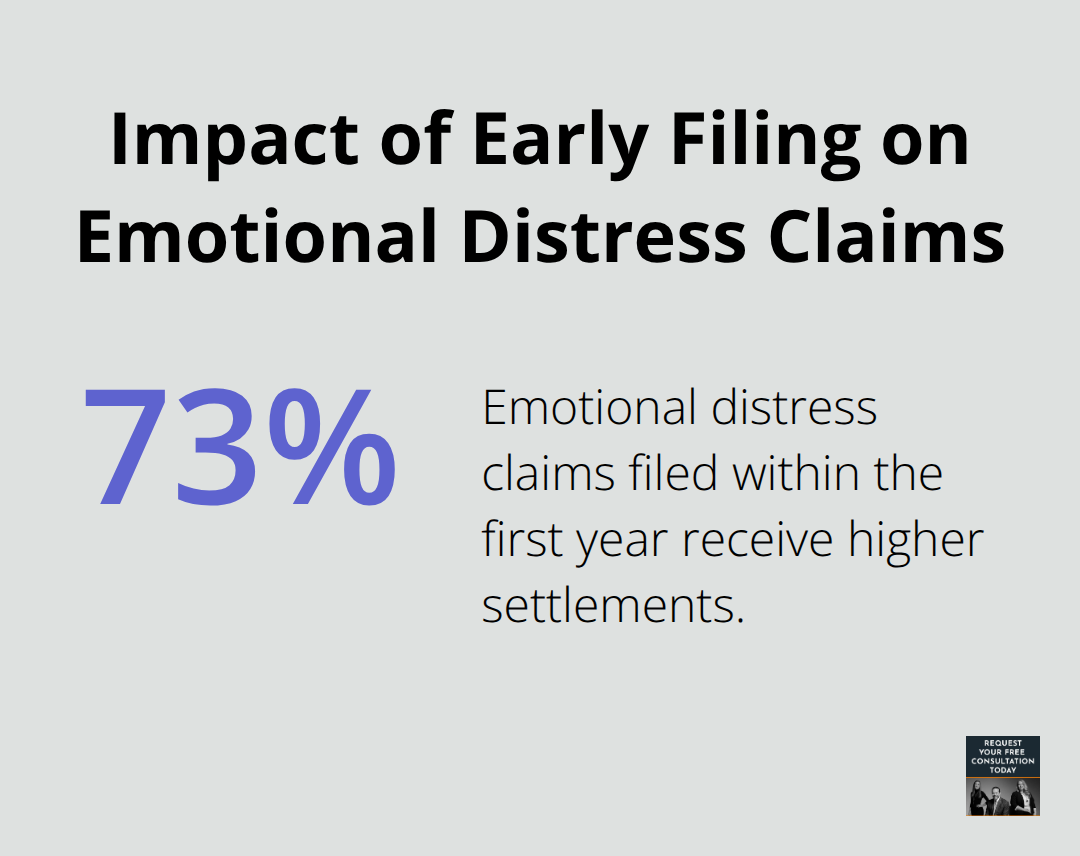
California’s statute of limitations gives you two years from your accident date to file emotional distress claims. This deadline applies whether you pursue compensation through insurance settlements or court litigation. The California Department of Insurance reports that 73% of emotional distress claims filed within the first year receive higher settlements than those filed later.
You must file your claim before this deadline expires, or you lose your right to compensation permanently. Courts make no exceptions for late filings, even when emotional symptoms develop months after the accident.
Initial Insurance Notification Requirements
You must notify all relevant insurance companies within 30 days of your emotional distress symptoms. California requires written notice that includes your accident details, injury descriptions, and initial medical documentation. This notification starts the formal claims process and protects your legal rights.
Insurance companies often use delayed notification as grounds to deny or reduce your claim value. They argue that late reporting suggests your emotional distress lacks severity or connection to the accident.
Insurance Company Settlement Tactics
Insurance adjusters typically offer settlements 40-60% below actual case values according to the California Department of Consumer Affairs. They pressure victims to accept quick settlements before the full extent of emotional trauma becomes clear. You should never accept initial offers without calculating long-term therapy costs and lost income potential.
Insurance companies often deny emotional distress claims initially, claiming insufficient medical evidence or questioning the connection between your symptoms and the accident. They frequently request independent medical examinations to challenge your mental health professional’s diagnoses (which can delay your case by several months).
Legal Representation During Negotiations
Insurance companies delay payments hoping victims will accept lower amounts out of financial desperation. Your legal representation becomes vital during these negotiations because experienced attorneys understand insurance company tactics and can counter their strategies effectively.
Attorneys can calculate the true value of your emotional distress claim by examining similar cases, medical costs, and long-term impact projections. They also handle all communication with insurance adjusters, preventing you from making statements that could harm your case.
Final Thoughts
Your emotional distress car accident compensation claim demands swift action and thorough documentation. You must record symptoms within 24 hours of your accident, schedule regular mental health appointments, and maintain detailed personal journals. California’s two-year statute of limitations creates urgency that insurance companies will exploit against delayed claims.
Emotional trauma after car accidents deserves equal attention to physical injuries. Your psychological wounds create real financial consequences through therapy costs, lost wages, and reduced quality of life. California courts recognize these damages when you present proper documentation and evidence.
We at Schaar & Silva LLP handle emotional distress claims throughout Santa Cruz County. Our team works with mental health professionals while managing insurance negotiations on your behalf (allowing you to focus on recovery rather than legal complexities). Contact us today to discuss your emotional distress claim and secure the compensation you deserve.
