
Car accidents can leave lasting physical and emotional scars. At Schaar & Silva LLP, we understand the challenges you face when seeking fair compensation for your pain and suffering.
This guide will help you navigate the complex process of auto accident pain and suffering compensation. We’ll explore key factors that influence your claim and provide practical tips for building a strong case.
What Is Pain and Suffering in Auto Accidents?
Auto accidents often result in more than just physical injuries. They cause significant emotional distress and long-lasting trauma. In legal terms, pain and suffering encompass both the physical discomfort and emotional anguish experienced by accident victims.
Physical Pain and Suffering
Physical pain and suffering include the actual bodily harm caused by the accident and any ongoing discomfort. Common physical injuries in auto accidents include:
- Whiplash: A neck injury that occurs when the head suddenly jerks forward and backward.
- Broken bones: Fractures in arms, legs, ribs, or other parts of the body.
- Spinal cord injuries: Damage to the spinal cord that can lead to partial or complete paralysis.
- Traumatic brain injuries: These range from mild concussions to severe brain damage.
The National Highway Traffic Safety Administration reports that approximately 3 million people suffer injuries in car accidents each year in the United States. These injuries can lead to chronic pain, limited mobility, and reduced quality of life.
Emotional Pain and Suffering
Emotional pain and suffering are equally important but often overlooked aspects of auto accident claims. These can include:
- Anxiety and depression
- Post-traumatic stress disorder (PTSD)
- Loss of enjoyment of life
- Sleep disturbances
- Relationship problems
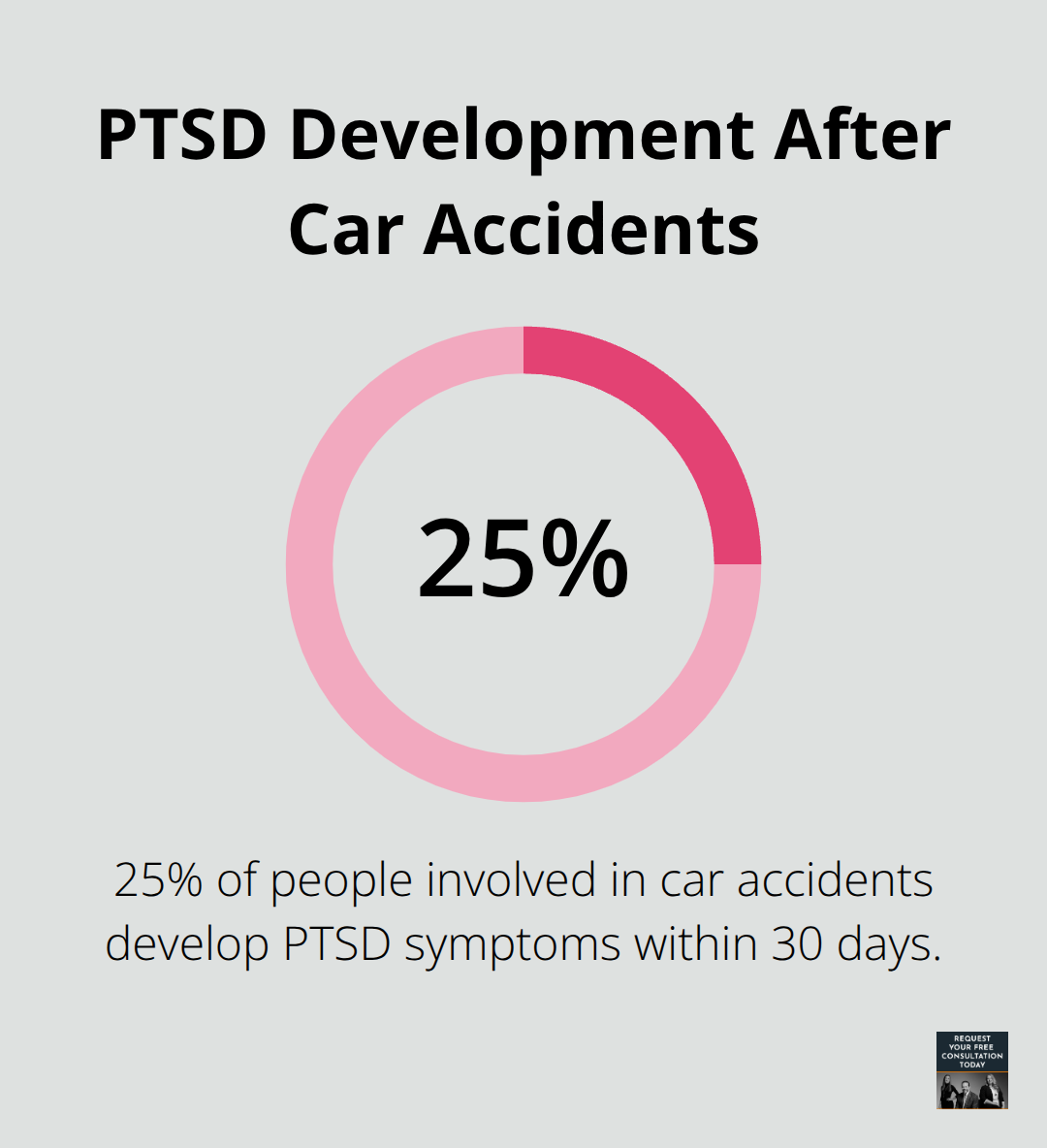
A study published in the Journal of Clinical Psychiatry found that up to 25% of people involved in car accidents develop PTSD symptoms within 30 days of the incident.
Documenting Pain and Suffering
Thorough documentation of both physical and emotional pain and suffering is essential. We advise our clients to:
- Keep detailed records of all medical treatments and medications
- Maintain a daily journal describing pain levels and emotional state
- Seek professional mental health support if needed
- Gather statements from friends and family about observed changes in behavior or mood
The Impact on Compensation
Pain and suffering can significantly impact the compensation you receive. While economic damages (like medical bills and lost wages) are straightforward to calculate, pain and suffering fall under non-economic damages. These are more subjective and can vary widely depending on the circumstances of your case.
In California, there’s no set formula for calculating pain and suffering damages. However, insurance companies and courts often use methods like the multiplier method or the per diem method to estimate these damages.
The next section will explore the factors that affect pain and suffering compensation in more detail, helping you understand how to build a strong case for fair compensation after an auto accident.
Factors Influencing Pain and Suffering Compensation
Severity and Duration of Injuries
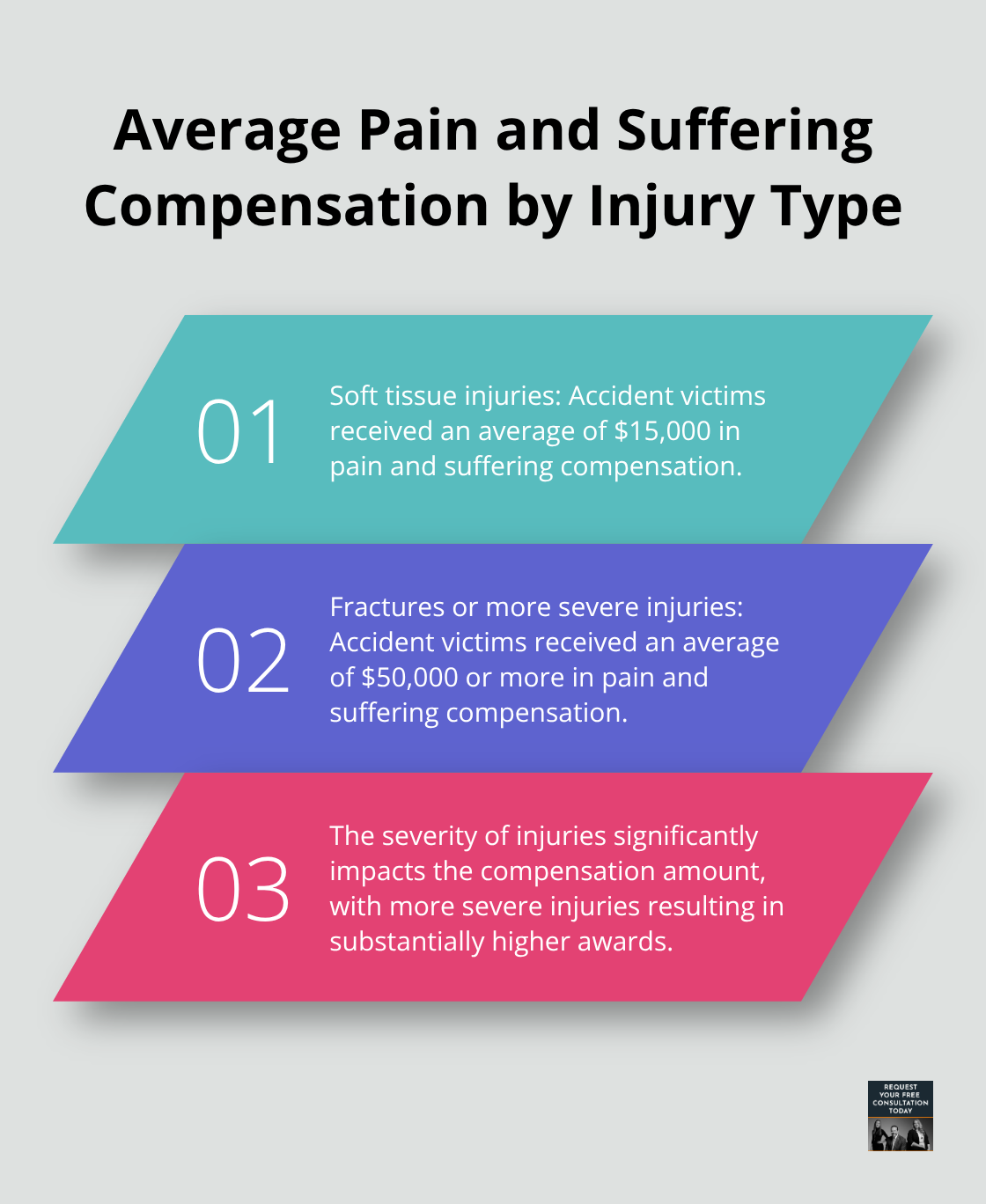
The compensation for pain and suffering after an auto accident depends heavily on the severity of injuries. More severe injuries typically result in higher awards. A study by the Insurance Research Council found that accident victims with soft tissue injuries received an average of $15,000 in pain and suffering compensation, while those with fractures or more severe injuries averaged $50,000 or more.
Recovery time also affects compensation. Cases involving extended hospital stays or prolonged rehabilitation often lead to increased settlements. The longer the recovery period, the more substantial the impact on a person’s life, which courts and insurance companies take into account.
Impact on Daily Life
The extent to which injuries disrupt daily life significantly influences compensation. This includes:
- Job performance limitations
- Difficulties with household tasks
- Restrictions on hobbies or recreational activities
- Changes in personal relationships
A National Highway Traffic Safety Administration survey revealed that 23% of car accident victims reported decreased ability to perform everyday activities six months after the incident. Such ongoing limitations can strengthen a claim for higher compensation.
Medical Treatments and Future Care
The type and duration of required medical treatments affect compensation. More intensive treatments (such as surgeries or specialized therapies) often lead to higher pain and suffering awards. The need for future medical care is also a critical factor.
For instance, a person who requires ongoing physical therapy or has permanent mobility issues due to their injuries may receive substantially more compensation than someone who fully recovers within a few months.
Psychological Impact
The psychological toll of an auto accident can match or exceed physical injuries in significance. Conditions like post-traumatic stress disorder (PTSD), anxiety, or depression can greatly increase pain and suffering compensation. The American Psychological Association reports that up to 45% of car accident survivors experience PTSD symptoms in the first year following the incident.
A comprehensive approach that documents both physical and psychological effects helps ensure that all aspects of suffering are considered when seeking fair compensation.
The next section will explore effective methods to document and prove pain and suffering, which is essential for building a strong case and maximizing your chances of receiving fair compensation.
How to Prove Pain and Suffering
Comprehensive Medical Documentation
Medical records provide the foundation for any pain and suffering claim. These documents offer objective evidence of your injuries and treatment. We recommend our clients to:
- Attend all medical appointments and follow treatment plans.
- Ask healthcare providers for detailed notes about pain levels and limitations.
- Keep records of all medications (including over-the-counter pain relievers).
- Undergo recommended diagnostic tests to fully assess injuries.
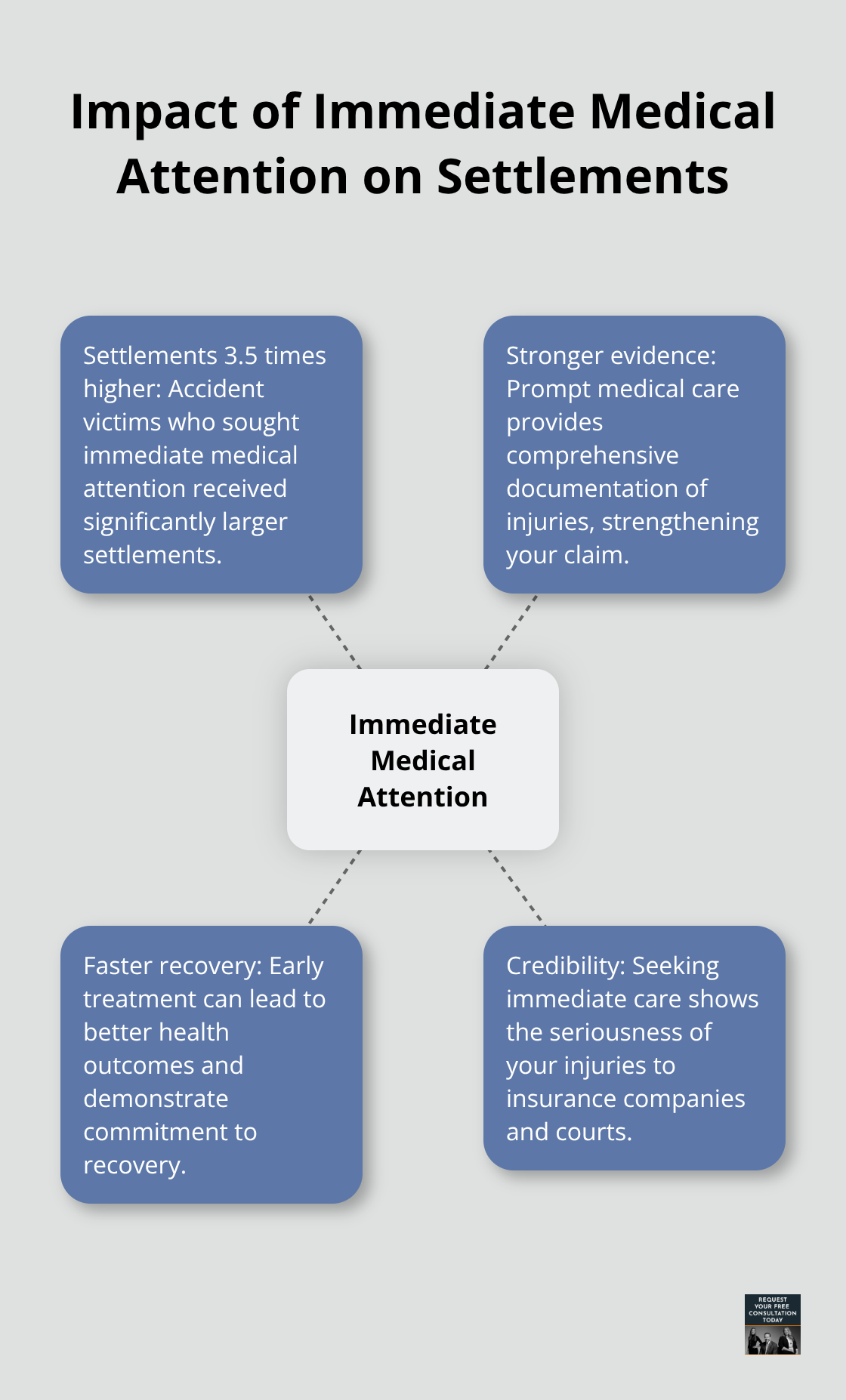
A study by the Insurance Research Council revealed that accident victims who sought immediate medical attention received settlements 3.5 times higher than those who delayed treatment.
Daily Pain and Activity Journals
A daily journal serves as a powerful tool to illustrate the impact of injuries on your life. We suggest:
- Record pain levels on a scale of 1-10 throughout each day.
- Note specific activities that cause pain or discomfort.
- Describe emotional states and any changes in mood or behavior.
- Document missed work days, social events, or family activities due to injuries.
These personal accounts paint a vivid picture of your suffering that medical records alone cannot convey.
Witness Statements and Visual Evidence
Third-party observations can significantly strengthen your case. We urge clients to:
- Collect statements from friends, family, and coworkers about observed changes in your abilities or demeanor.
- Take photographs of visible injuries, medical devices used, and any property damage.
- Keep a record of social media posts that demonstrate your pre-accident lifestyle compared to post-accident limitations.
The National Association of Insurance Commissioners reports that claims supported by photographic evidence settle 20% faster on average.
Expert Testimony
Expert witnesses (such as medical professionals or accident reconstruction specialists) can provide valuable insights into the extent of your injuries and their long-term effects. Their testimony can lend credibility to your claim and help quantify your pain and suffering.
Legal Representation
An experienced personal injury attorney can help you navigate the complex process of proving pain and suffering. They can gather and present evidence effectively, negotiate with insurance companies, and (if necessary) represent you in court. At Schaar & Silva LLP, we combine these elements to create a comprehensive narrative of your pain and suffering, helping Santa Cruz County residents secure the compensation they deserve after auto accidents.
Final Thoughts
Auto accident pain and suffering compensation cases challenge many victims. Insurance companies often minimize payouts, which makes professional legal representation essential. An experienced attorney will gather evidence, negotiate with insurers, and represent your interests in court if needed.
We at Schaar & Silva LLP offer dedicated support for Santa Cruz County residents seeking fair compensation. Our team combines years of experience in personal injury law with a deep understanding of local regulations. We handle the legal complexities of your case, allowing you to focus on recovery.
Schaar & Silva LLP provides comprehensive services tailored to your needs (including assistance with medical bills and property damage claims). We recognize the importance of emotional well-being and can connect you with specialists for psychological support. Don’t let the aftermath of an auto accident overwhelm you – contact us to secure your fair compensation and peace of mind.
