

Car accidents can leave lasting psychological scars, affecting victims long after physical injuries heal. At Schaar & Silva LLP, we understand the profound impact these traumatic events can have on your mental well-being and quality of life.
This guide explores psychological trauma after car accident compensation in Santa Cruz, California, covering common symptoms, legal options, and the claims process. We aim to provide valuable insights for those navigating the challenging aftermath of a car accident and seeking rightful compensation for their psychological injuries.
How Psychological Trauma Affects Car Accident Victims
The Emotional Toll of Car Accidents
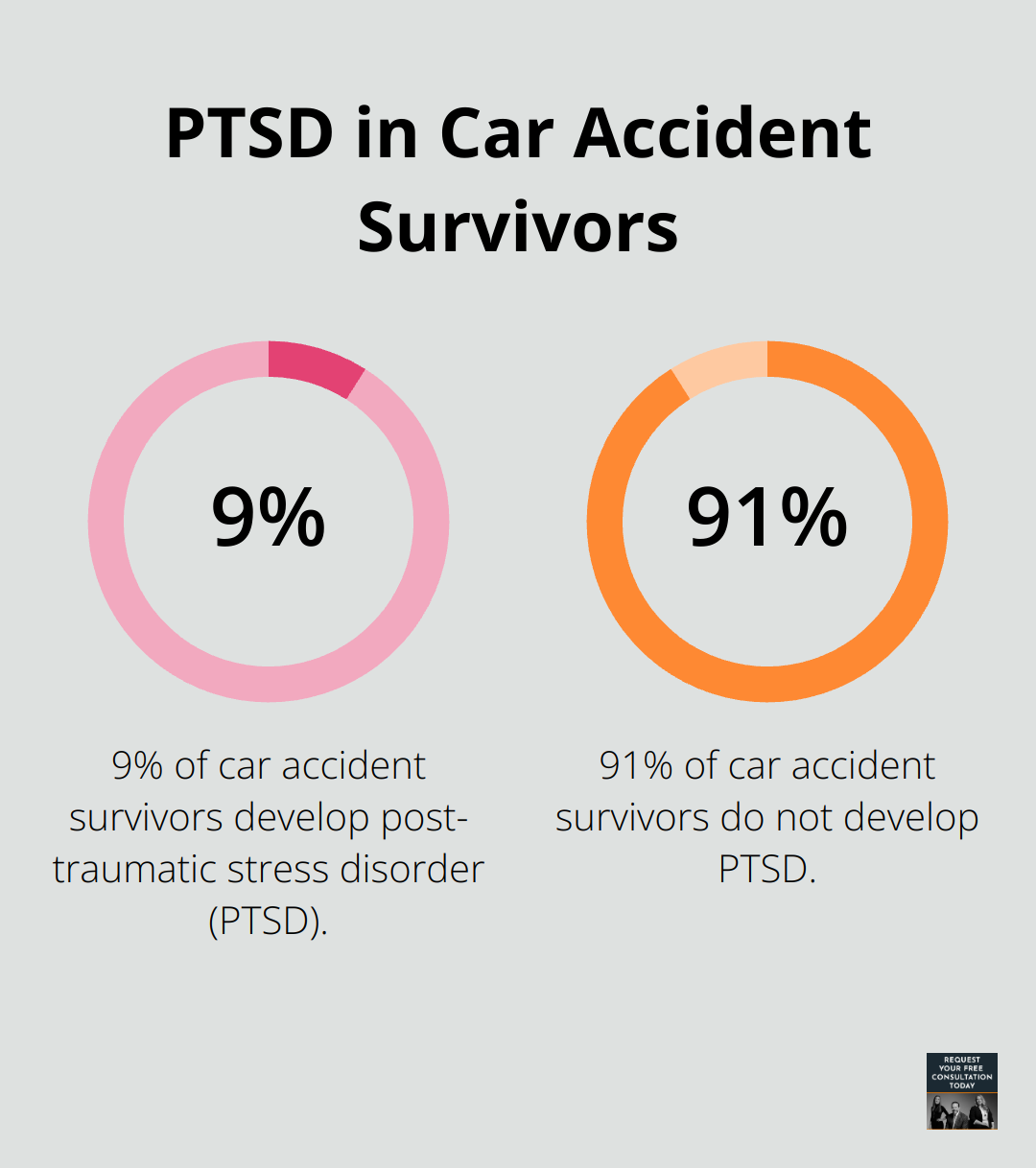
Car accidents often inflict invisible scars that can profoundly impact a person’s life. In Santa Cruz, numerous cases show the psychological aftermath of a crash persists long after physical injuries heal. Many car accident survivors experience a range of psychological effects. Anxiety frequently occurs, with some individuals developing intense fear of driving or even being a passenger. Depression can take hold as victims struggle with physical limitations or financial stress from medical bills and lost wages. The American Psychological Association reports that about 9% of car accident survivors develop post-traumatic stress disorder (PTSD).
Recognizing Trauma Symptoms
Identifying signs of psychological trauma is essential for recovery. Flashbacks, nightmares, and intrusive thoughts about the accident are telltale symptoms. Some people experience mood swings, irritability, or withdraw from social activities. Physical manifestations like insomnia, headaches, or unexplained pain can also indicate underlying trauma. (These symptoms often intertwine, creating a complex web of psychological distress.)
Long-Term Effects on Daily Life
The impact of psychological trauma extends far beyond immediate emotional distress. Relationships often suffer as victims struggle to communicate their experiences or rely heavily on loved ones for support. Work performance may decline due to concentration difficulties or anxiety-related absences. In severe cases, some individuals find themselves unable to maintain employment, leading to financial instability. The ripple effects of trauma can touch every aspect of a person’s life, from personal relationships to professional aspirations.
The Importance of Professional Help
Seeking both medical and psychological care after an accident is paramount. Proper documentation of these issues is also critical for building a strong compensation claim. Mental health professionals can provide targeted therapies (such as cognitive-behavioral therapy or EMDR) to address trauma symptoms and improve overall well-being.
Legal Support for Psychological Trauma
At Schaar & Silva LLP, we understand the complex nature of psychological trauma following car accidents. Our team works diligently to ensure that your mental health concerns are taken seriously in your compensation claim. We collaborate with mental health experts to substantiate your case and fight for the full spectrum of damages you deserve.
As we move forward, it’s important to explore the specific types of compensation available for psychological injuries in Santa Cruz and how to effectively document your symptoms for a strong legal claim.
How to Obtain Compensation for Psychological Trauma
At Schaar & Silva LLP, we understand the invisible scars left by car accidents. Psychological trauma is a real consequence, and you deserve compensation for its impact on your life. This chapter outlines the process of seeking compensation for psychological injuries in Santa Cruz.
Types of Compensation Available
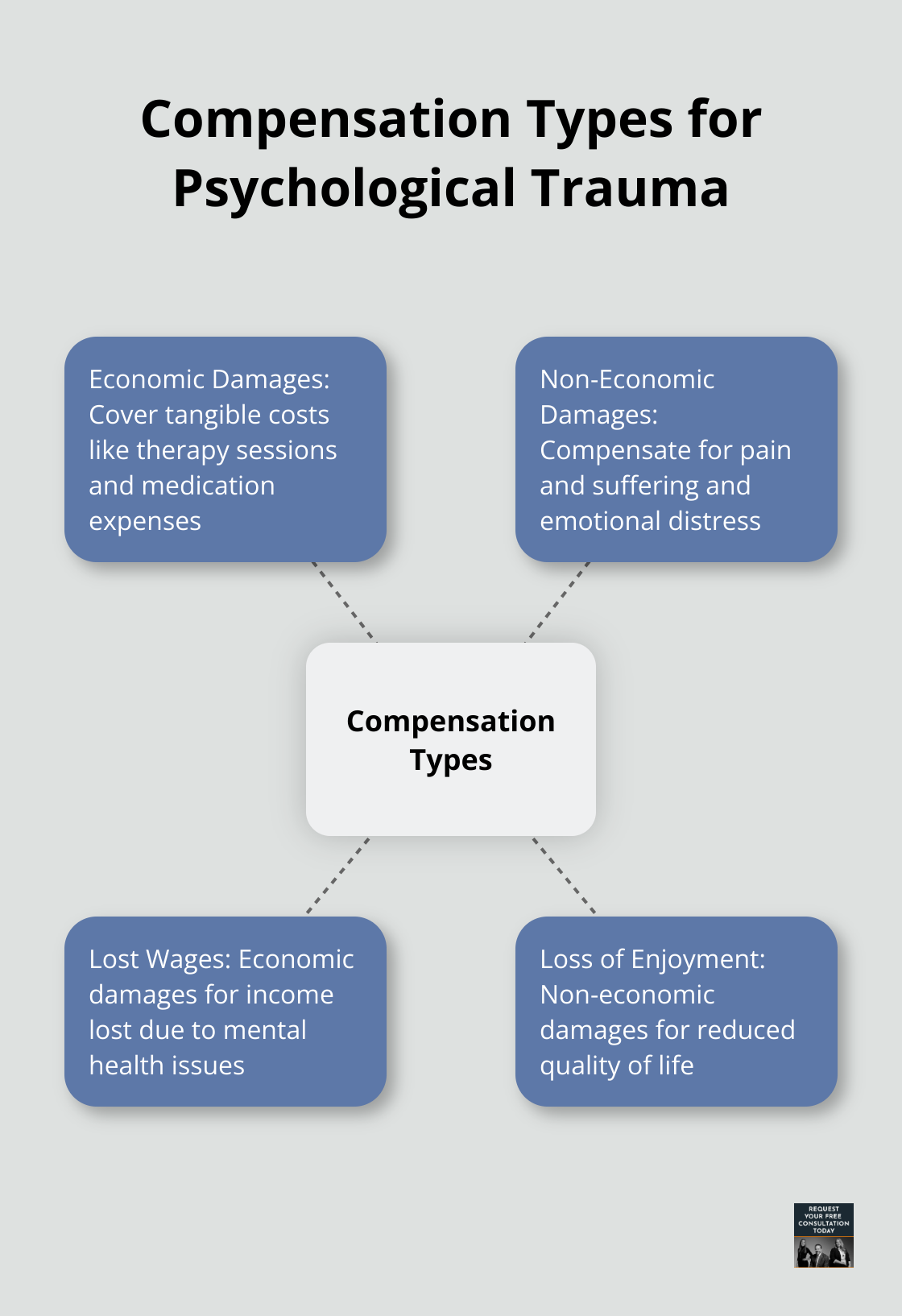
California law allows victims to claim both economic and non-economic damages for psychological trauma. Economic damages cover tangible costs such as:
- Therapy sessions
- Medication expenses
- Lost wages due to mental health issues
Non-economic damages compensate for:
- Pain and suffering
- Emotional distress
- Loss of enjoyment of life
The California Civil Jury Instructions (CACI) recognize mental suffering as a component of pain and suffering damages. This means juries can award compensation for anxiety, depression, and PTSD resulting from car accidents.
Importance of Documenting Symptoms
Proper documentation strengthens your claim. We recommend you:
- Keep a detailed journal of your symptoms
- Record the frequency and intensity of anxiety attacks
- Note changes in sleep patterns
- Document mood swings and emotional outbursts
- Track difficulties in daily activities or work performance
Save all receipts for mental health treatments, medications, and any adaptive devices or services you’ve needed due to your psychological state. (This documentation will serve as crucial evidence in your case.)
Role of Mental Health Professionals
Mental health professionals provide invaluable support for your claim. A diagnosis from a licensed psychologist or psychiatrist carries significant weight in legal proceedings. These experts offer:
- Official diagnoses of conditions like PTSD or depression
- Detailed treatment plans and prognoses
- Expert testimony on how the trauma affects your life
In Santa Cruz, we collaborate with a network of trusted mental health professionals who understand the legal aspects of psychological injury claims. (Their expertise can make a substantial difference in the outcome of your case.)
Overcoming Insurance Company Challenges
Insurance companies often attempt to minimize psychological injuries. They may argue that your symptoms are unrelated to the accident or exaggerated. This is where strong legal representation becomes essential.
A skilled attorney will:
- Present compelling evidence of your psychological trauma
- Negotiate effectively with insurance adjusters
- Prepare your case for trial if necessary
Building a Strong Case
To build a robust case for psychological trauma compensation, you should:
- Seek immediate medical attention after the accident
- Follow through with all recommended treatments
- Maintain consistent communication with your healthcare providers
- Gather witness statements from friends and family about changes in your behavior
- Work closely with your attorney to ensure all deadlines are met
The process of obtaining compensation for psychological trauma can be complex, but with the right support, you can secure the resources you need for recovery. The next chapter will explore the legal process for filing psychological trauma claims in Santa Cruz, including important timeframes and what to expect in court.
Navigating the Legal Process for Psychological Trauma Claims
Initiating Your Claim
The legal journey for psychological trauma claims in Santa Cruz requires a thorough understanding of the process. The first step involves filing a claim. California law typically allows two years from the accident date to file a personal injury lawsuit. However, we recommend starting the process immediately. Swift action preserves evidence and allows for accurate documentation of psychological symptoms.
To file a claim, you must submit a detailed account of the accident, your injuries, and their impact on your life. This includes both physical and psychological effects. (A daily journal documenting your symptoms, challenges, and treatments can provide invaluable support for your claim.)
Proving Psychological Trauma in Court
Demonstrating psychological trauma in court demands a strategic approach. Unlike physical injuries, psychological injuries lack tangibility. Expert testimony plays a vital role in these cases.
Mental health professionals in Santa Cruz can provide expert opinions on your condition. These experts explain to the court how the accident affected your mental health, your prognosis, and the long-term implications of your trauma. Their testimony significantly strengthens your case.
We collect evidence from various sources to create a comprehensive picture of your psychological state before and after the accident. This may include:
- Medical records and psychological evaluations
- Testimony from friends, family, and colleagues about behavioral changes
- Employment records showing changes in work performance or attendance
- Documentation of lifestyle changes necessitated by your psychological condition
Meeting Legal Deadlines
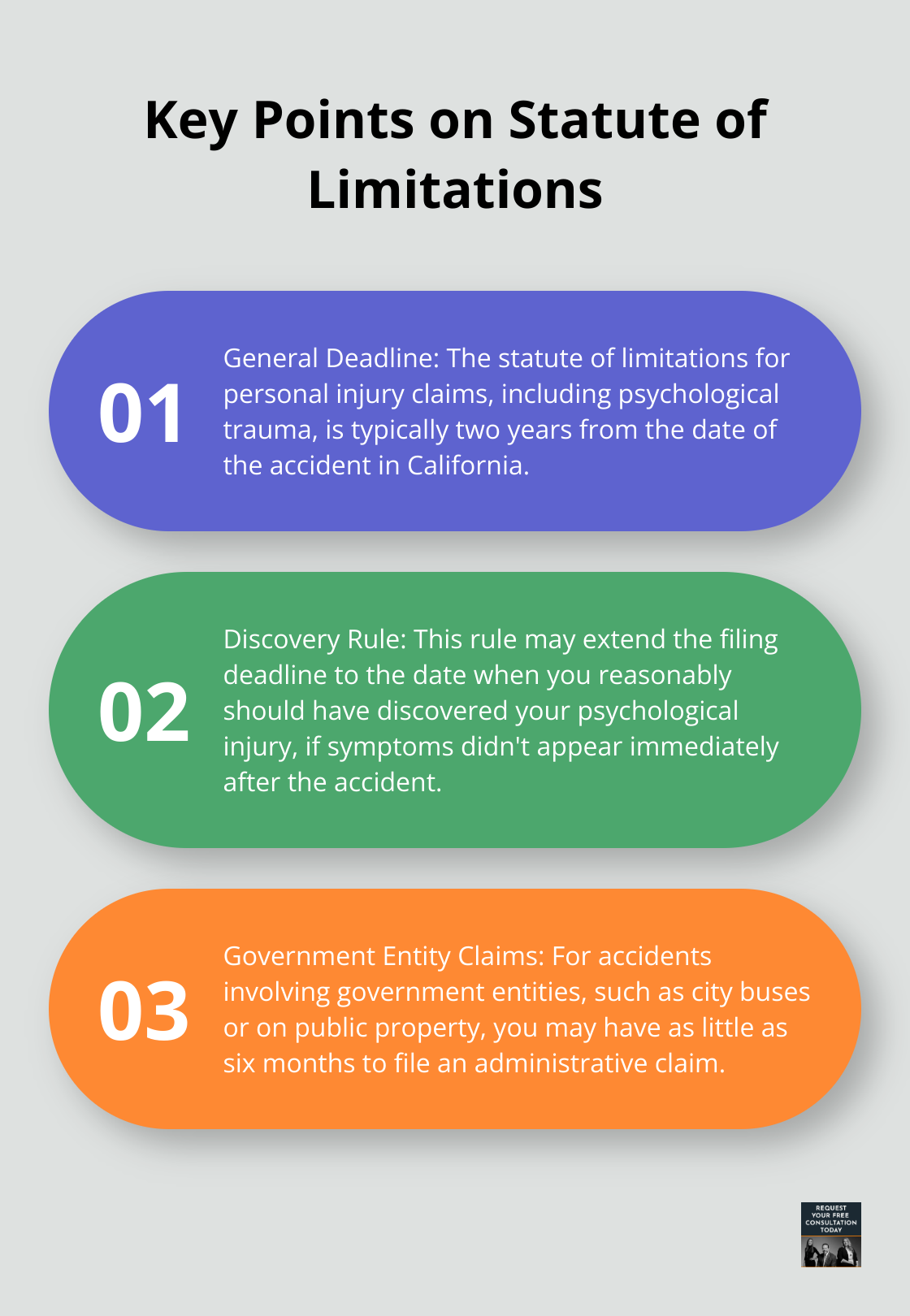
Adherence to legal timeframes is critical in psychological trauma claims. In Santa Cruz, as in the rest of California, the statute of limitations for personal injury claims is generally two years from the accident date. However, exceptions may apply to your case.
If your psychological symptoms didn’t appear immediately after the accident, you might argue for the “discovery rule.” This rule potentially extends the filing deadline to the date when you reasonably should have discovered your injury.
Claims against government entities, such as accidents involving city buses or on public property, have much shorter deadlines. In these cases, you may have as little as six months to file an administrative claim. (Early consultation with a lawyer allows for case assessment, evidence gathering, and meeting all deadlines.)
Navigating Insurance Challenges
Insurance companies often attempt to minimize psychological injuries. They may argue that your symptoms are unrelated to the accident or exaggerated. Strong legal representation becomes essential in these situations.
A skilled attorney will:
- Present compelling evidence of your psychological trauma
- Negotiate effectively with insurance adjusters
- Prepare your case for trial if necessary
Building a Strong Case
To build a robust case for psychological trauma compensation, you should:
- Seek immediate medical attention after the accident
- Follow through with all recommended treatments
- Maintain consistent communication with your healthcare providers
- Gather witness statements from friends and family about changes in your behavior
- Work closely with your attorney to ensure all deadlines are met
Final Thoughts
Psychological trauma after car accident compensation requires a comprehensive approach. Victims in Santa Cruz should seek immediate medical and psychological care to address their symptoms. Proper documentation of all treatments, expenses, and daily life impacts strengthens the case for compensation.
We at Schaar & Silva LLP understand the challenges of psychological trauma following car accidents. Our team provides support throughout the legal process, from connecting clients with mental health specialists to advocating for fair compensation. (This holistic approach aims to alleviate the burden on victims during their recovery.)
For those experiencing psychological trauma after a car accident in Santa Cruz, professional help can make a significant difference. We encourage you to reach out to Schaar & Silva LLP for guidance on your legal options and support in your recovery journey. Our experienced team stands ready to assist you through this difficult time.
